
5 Warning Signs Your South Florida Seawall Is Failing
Most South Florida seawall failures don't happen overnight — they announce themselves weeks, months, or even years in advance. Here are the 5 warning signs waterfront homeowners miss most often, and what each one is telling you about the health of your wall.
Most South Florida seawall failures don't happen overnight. They announce themselves weeks, months, and sometimes years in advance — through warning signs that are easy to spot once you know what you're looking at. The problem is that most waterfront homeowners don't know what they're looking at. They see a crack and assume it's cosmetic. They notice soil moving toward the water and chalk it up to rain. They spot rust staining on the wall face and figure it's just age.
By the time the wall visibly fails — a panel shifts, a section leans dramatically, a sinkhole opens up in the yard — the damage is almost always far more expensive to fix than it would have been if the warning signs had been caught and addressed earlier. This is the list of the five warning signs JKT Marine sees most often on South Florida seawalls — and what each one is actually telling you.
Warning Sign #1 — Rust Staining Running Down the Wall Face
Of all the warning signs on this list, rust staining is the one most commonly dismissed as cosmetic. It isn't.
Orange or brown staining running down the face of your seawall panels or cap is the visible evidence of something happening inside the concrete that you cannot see from the surface. It means saltwater has penetrated the concrete cover and reached the steel reinforcement inside. Once saltwater reaches rebar, corrosion begins immediately and accelerates in South Florida's warm, humid environment faster than almost anywhere else in the country.
Here's why this matters structurally: as steel corrodes it expands. Corroding rebar inside a concrete panel exerts outward pressure on the surrounding concrete — cracking it further from the inside out and creating new pathways for saltwater to penetrate even deeper. By the time heavy rust staining is visible on the surface the corrosion inside is typically well advanced.
The right response to rust staining is a professional inspection and prompt restoration — treating the exposed rebar, restoring the concrete cover, and sealing the surface. The wrong response is painting over it or ignoring it because the wall still looks structurally sound from a distance.
What to do: Schedule a free seawall inspection. Rust staining that's caught before the rebar has corroded through is a restoration job. Rust staining that's ignored until the panel begins to fail is a replacement conversation.
Warning Sign #2 — Soil or Yard Material Moving Toward the Water
This one shows up after rain events, king tides, or periods of heavy boat traffic — and it's one of the most serious warning signs a South Florida waterfront homeowner can observe.
If you notice soil, mulch, gravel, or any yard material migrating toward the water and washing through or under your seawall, water is finding a pathway through the wall system and carrying solid material with it. Every time that happens, a little more soil is removed from behind the wall. Over weeks and months those small losses accumulate into voids — hollow spaces behind the seawall where the soil that was supporting it used to be.
Voids are dangerous for two reasons. First they're invisible from the surface — a seawall panel that looks completely intact from the front can have substantial void space directly behind it. Second they develop a feedback loop — as the void grows it allows more water movement which carries more soil which grows the void faster. At a certain size a void reaches a tipping point and the wall above it can shift, settle, or fail with very little additional warning.
In South Florida's tidal environment this process can move faster than homeowners expect. A small amount of soil washing toward the water after a storm can become a significant structural problem within a single hurricane season.
What to do: Don't wait on this one. Void filling using pressure grouting is a highly effective seawall restoration technique that fills voids completely, stops soil loss, and restores the ground support your wall depends on. Caught early it's a straightforward restoration job. Left until the voids are extensive it can push toward replacement territory.
Warning Sign #3 — Cracks in the Seawall Cap
The seawall cap is the horizontal concrete beam that runs along the top of your wall and ties the entire system together. It's also the most exposed component of your seawall — taking direct boat wake energy from the water side and foot traffic, rain, and Florida's extreme UV exposure from above.
Not every crack in a seawall cap is a crisis. Hairline surface cracks in older concrete are common and can sometimes be monitored rather than immediately repaired. But these specific crack types warrant immediate professional attention:
Cracks that run through the full depth of the cap — These are structural cracks, not surface cracks. They compromise the cap's ability to lock the panel tops in place and distribute load across the wall.
Cracks that are widening — A crack that was narrow last year and is wider this year is an active problem. Something is moving.
Cracks with rust staining — As discussed above, rust staining at a crack means water is reaching the rebar inside.
Longitudinal cracks running the length of the cap — These often indicate that the cap is being pushed or pulled along its length, usually related to tie rod or anchor system issues below.
What to do: Have the cracks professionally evaluated. The difference between a crack that needs monitoring and a crack that needs immediate restoration is something a licensed marine contractor can determine on inspection. Most cap cracks are restoration jobs — and cap restoration is one of the most cost-effective seawall services available.
Warning Sign #4 — Sinkholes or Soft Spots Near the Seawall
Depressions forming in your yard near the seawall — or areas where the ground feels soft or spongy underfoot — are the surface expression of void formation behind the wall. When you can see or feel the ground subsiding near your seawall the voids behind the wall are large enough to have begun collapsing the soil above them.
This is not a warning sign you can afford to wait on. By the time sinkholes are visible at the surface the void formation below is already significant. In South Florida's tidal environment — where tidal movement, storm surge, and heavy rain all put constant pressure on seawall systems — a sinkhole near your wall can develop into a structural failure event quickly.
Property owners sometimes mistake these depressions for normal settling or erosion from rain. In a non-waterfront yard that might be a reasonable assumption. Against a seawall in a tidal environment it almost never is.
What to do: Call for an inspection immediately. This is one situation where we'd rather you call us the same week you notice it than schedule something for next month. Void filling and soil restoration can address this effectively when caught before the voids reach critical size — but the window for restoration narrows as void formation progresses.
Warning Sign #5 — Bowing, Leaning, or Movement in the Wall
A seawall panel that is visibly bowing outward — curving toward the water under the pressure of the soil and hydrostatic pressure behind it — or leaning toward the water is showing you that the tie rod and anchor system that holds it in place is compromised.
The tie rod system is what keeps your seawall upright. Steel tie rods connect the back of the seawall panels to deadman anchors buried in the soil behind them — creating a tensioned system that resists the constant outward pressure the wall faces. In South Florida's saltwater environment tie rods corrode from the outside in, and because they're buried and underwater they're not visible for routine inspection.
When tie rods fail — through corrosion, overloading, or anchor failure — the panels they were holding begin to move. Initially this shows up as subtle outward lean or bowing. As more tie rods fail the movement accelerates. A wall that leans a few inches today and goes unaddressed can lean significantly more after a single hurricane season.
What to do: Have the wall professionally inspected as soon as you notice any movement. Tie rod replacement is a core seawall restoration service and is far less expensive than the alternative — waiting until panels have moved significantly, requiring replacement of structural components that could have been saved with earlier intervention.
The Common Thread — Time Is Money With Seawall Problems
Every one of these five warning signs shares the same characteristic: the cost of addressing them increases the longer they go unaddressed. Rust staining that's restored promptly costs a fraction of what it costs once the rebar has corroded through and the panel is structurally failing. Voids caught early are a pressure grouting job — voids caught late can require panel replacement or full wall restoration. Tie rod issues addressed proactively cost a fraction of what they cost once significant panel movement has occurred.
South Florida's environment — saltwater, heat, tidal fluctuation, hurricane exposure — accelerates seawall deterioration faster than almost anywhere else in the country. The maintenance timelines that apply in freshwater or lower-salinity environments don't apply here. Annual inspections are not excessive for a South Florida seawall — they're the minimum that makes financial sense given what's at stake.
What a Professional Seawall Inspection Actually Covers
A professional seawall inspection from JKT Marine covers every component of your wall system:
Full cap inspection — cracks, spalling, rebar exposure, elevation compliance
Panel inspection — cracking, bowing, joint separation, surface deterioration
Tie rod and anchor assessment — all accessible hardware checked for corrosion
Void probing — systematic probing behind the wall to identify void formation
Waterline zone assessment — the area of highest deterioration concentration
Drainage review — weep holes and drainage function throughout the wall
Written report — a document you keep, not just a verbal summary
The inspection is free. There is no obligation to hire us afterward.
JKT Marine — Seawall Inspection, Restoration & Repair Throughout South Florida
JKT Marine Construction has been inspecting, repairing, and restoring seawalls throughout Palm Beach, Broward, and Martin County since 2014. Our owner conducts every inspection personally. If your wall is showing any of the warning signs above — or if it's been more than two years since your last professional inspection — call us. We'll come out, walk the entire wall, and give you an honest written assessment of where things stand.
📞 Call JKT Marine: (561) 418-0383
🌐 www.jktmarine.com
📍 Serving Boca Raton, Delray Beach, Boynton Beach, West Palm Beach, Palm Beach Gardens, Jupiter, Deerfield Beach, Pompano Beach, Lighthouse Point, Hillsboro Beach, Fort Lauderdale, and surrounding areas.
How to Tell if Your Seawall Needs Repair, Restoration, or Replacement
Cracks, rust stains, soft spots in your yard — your seawall is telling you something. This guide breaks down the difference between repair, restoration, and full replacement so South Florida waterfront homeowners can make the right call before a small problem becomes a very expensive one.
If you own waterfront property in South Florida, your seawall works around the clock. It stands between your home and the constant push and pull of tidal water, boat wake, storm surge, and shoreline erosion. When it starts showing signs of trouble — cracks running through the cap, soil washing out from behind the panels, rust staining down the face — the first question every homeowner asks is the same one: how bad is it?
The honest answer is that not every seawall problem is a crisis. But some are. And the difference between catching a problem early versus letting it go determines whether you're writing a check for a few thousand dollars or a few hundred thousand. This guide walks you through how to tell what your wall actually needs — and what the three options on the table really mean.
First — Understand the Three Options
Before looking at warning signs, it helps to understand what repair, restoration, and replacement actually mean. These words get used interchangeably by contractors, but they describe very different scopes of work with very different price tags.
Repair is targeted. It addresses one specific problem — a cracked cap section, a single corroded tie rod, a localized void. Repair work assumes the rest of the wall system is fundamentally sound. It's the least disruptive and least expensive option and is the right call when damage is isolated and caught early.
Restoration is comprehensive. It addresses multiple deteriorating components together — cap, panels, tie rods, voids, drainage — as a complete system. Restoration is what you do when the wall has several issues developing at once but the overall structure still has life in it. A properly executed seawall restoration in South Florida typically adds 15 to 25 years of service life.
Replacement is a last resort. It means removing the existing wall entirely and building a new one from scratch. It's the most expensive, most disruptive, and longest option — requiring full permitting that can take months. Replacement is only the right call when the wall has deteriorated past the point where restoration can provide reliable long-term performance.
Most South Florida seawalls that look like they need replacement actually need restoration. The difference matters enormously to your wallet.
Warning Signs and What They Mean
Cracks in the Seawall Cap
The cap is the horizontal concrete beam that runs along the top of your seawall. It's also the most exposed component — taking direct hits from boat wake, foot traffic, and Florida's heat and rain cycles year-round.
Small hairline cracks in the cap surface are common and don't necessarily indicate a structural emergency. But cracks that run all the way through the cap, cracks that are widening over time, or cracks accompanied by rust staining are a different story. Rust staining means the rebar inside the cap is already corroding — and once saltwater reaches rebar, corrosion accelerates rapidly.
What it usually means: Repair or restoration. Cap repair is one of the most cost-effective seawall services available — catching it early keeps costs manageable.
Rust Staining on the Wall Face
Orange or brown staining running down the face of your seawall panels is one of the most important warning signs and one of the most commonly ignored. The staining itself isn't the problem — it's what it's telling you about what's happening inside the concrete.
Rust stains mean saltwater has penetrated the concrete and reached the steel reinforcement inside. Rebar corrosion in a saltwater environment is aggressive and largely invisible — by the time you see heavy rust staining on the surface the corrosion inside is already well advanced. Left unaddressed, corroding rebar expands as it rusts, cracking the concrete further from the inside out.
What it usually means: Restoration. The affected sections need rebar treatment, concrete restoration, and surface sealing before the damage spreads further.
Soil Washing Toward the Water
If you notice soil, mulch, or yard material migrating toward the water after rain or tidal movement that's one of the most serious warning signs on this list. It means water is finding a path through or under your seawall and carrying soil with it. Over time this creates voids — hollow spaces behind the wall where the soil that was supporting it has been washed away.
Voids are dangerous because they're invisible from the surface and because they develop faster than most homeowners expect. A seawall panel that looks completely solid from the front can have several feet of void space behind it. When that void reaches a critical size the wall can shift, lean, or fail with very little additional warning.
What it usually means: Restoration urgently. Void filling using pressure grouting is a core seawall restoration service — it fills the void, stops the soil loss, and restores the ground that supports your wall.
Sinkholes or Soft Spots Near the Waterline
Depressions forming in your yard near the seawall are the surface expression of void formation behind the wall. If the ground near your seawall feels soft, spongy, or has developed visible depressions, voids have already formed and the soil above them is beginning to collapse.
This is not a wait-and-see situation. Sinkholes near a seawall are a sign that soil loss is advanced enough to be visible from the surface — which means the voids below are significant.
What it usually means: Restoration immediately. In some cases where void formation is severe and widespread, this can push toward replacement territory — which is exactly why acting on early signs matters.
Bowing or Leaning Panels
A seawall panel that is visibly bowing outward or leaning toward the water is under structural stress it isn't handling well. This usually means the tie rod system — which holds the wall back against the pressure of the soil and water behind it — is failing or has already failed in that section.
Minor outward lean in older walls is not uncommon and doesn't always indicate imminent failure. But progressive lean — a wall that is moving more than it was last year — is a serious warning sign that needs professional evaluation immediately.
What it usually means: Restoration if the tie rod system can be repaired or replaced. Replacement if the panel itself has failed structurally and the lean is severe.
Gaps Between the Cap and Panels
Separation opening between the cap and the top of the panels below it indicates movement in the wall system. The cap and panels are designed to work together as a unit — when they separate, water intrudes directly into the joint, accelerating deterioration of both components and allowing soil to wash out through the gap.
What it usually means: Restoration. The joint needs to be resealed and the underlying cause of the movement — typically tie rod loosening or void formation — needs to be addressed.
Cap Below County Elevation Standards
This one surprises a lot of South Florida homeowners. Both Palm Beach County and Broward County have minimum elevation requirements for seawall caps relative to mean high water. Caps that have settled below these standards are not just structurally compromised — they're non-compliant, which can affect your property insurance and your ability to sell the property.
What it usually means: Cap restoration or raise. This is a targeted restoration service that brings your cap back to county standards — it doesn't require full wall replacement.
When Replacement Is Actually Necessary
Full seawall replacement is the right call in a specific set of circumstances. All of the following need to be true — not just one or two:
Multiple panels have failed or are significantly displaced from their original position
The tie rod and anchor system is completely corroded with no viable repair points remaining
Void formation is extensive and widespread behind the wall
The concrete has deteriorated past the point where epoxy repair or patching will hold
The wall is leaning severely — more than a few inches out of vertical across most of its length
The wall is 40 to 50 years old with no prior restoration history
If your wall has one or two of these issues but not all of them replacement is almost certainly premature. A contractor recommending full replacement on a wall with a cracked cap and some rust staining is not giving you an honest assessment.
The Most Important Thing You Can Do Right Now
Get a professional inspection from a licensed marine contractor — not a sales representative, not an estimator, a licensed contractor who has actually built and restored seawalls in South Florida's specific environment. The inspection should be free, it should result in a written report, and the contractor should be able to show you exactly what they're seeing and explain why they're recommending what they're recommending.
JKT Marine offers free seawall inspections throughout Palm Beach, Broward, and Martin County. Our owner conducts every inspection personally. You get a written report, an honest recommendation — repair, restoration, or replacement — and a clear estimate if work is needed. No pressure. No obligation.
The earlier you catch a seawall problem, the more options you have and the lower the cost. A wall that needs a $5,000 restoration today can become a $100,000 replacement in three to five years if the right things are ignored.
JKT Marine — Seawall Repair, Restoration & Replacement Throughout South Florida
JKT Marine Construction has been repairing and restoring seawalls throughout Palm Beach, Broward, and Martin County since 2014. We handle everything from targeted cap repair to complete seawall restoration and full replacement — with all permitting managed by our team. Family-owned, licensed CGC1537758, and 5-star rated.
📞 Call JKT Marine: (561) 418-0383
🌐 www.jktmarine.com
📍 Serving Boca Raton, Delray Beach, Boynton Beach, West Palm Beach, Palm Beach Gardens, Jupiter, Deerfield Beach, Pompano Beach, Lighthouse Point, Fort Lauderdale, and surrounding areas.

Pile Driving 101 — What South Florida Homeowners Need to Know
Learn how marine piling installation and piling driving provide the foundation for docks, boat lifts, seawalls, and waterfront structures throughout South Florida. JKT Marine explains the piling installation process, materials, and best practices for long-term durability.
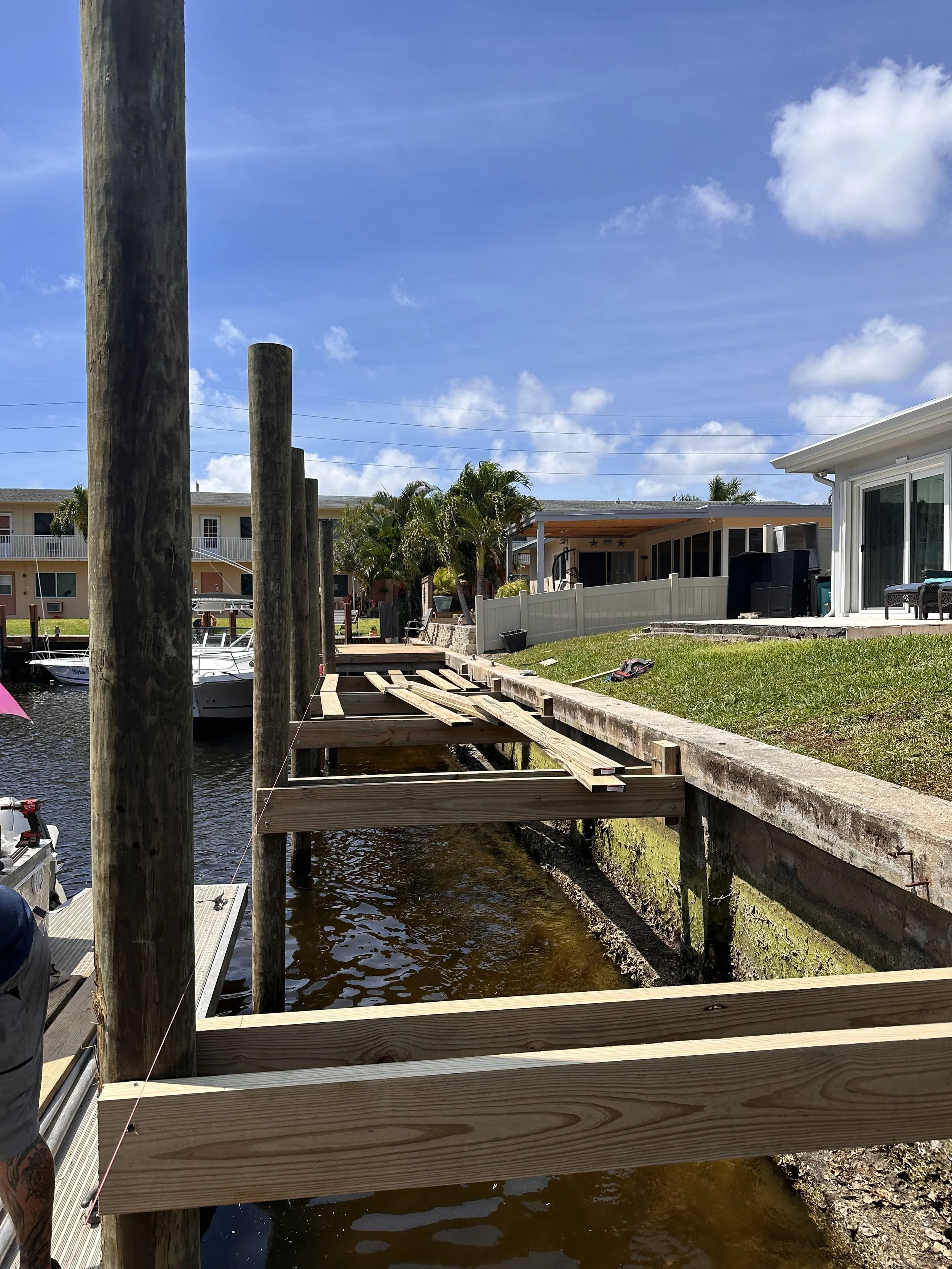
New marine pilings and dock framing being installed for a waterfront construction project in South Florida. Proper piling installation provides the structural foundation required to support docks, boat lifts, and other marine structures while withstanding harsh marine conditions.
If you are planning a new dock, replacing an aging one, or having a seawall repaired in South Florida, there is a good chance pile driving is part of the project. It is one of the most fundamental aspects of marine construction in Palm Beach County and Broward County — and one that most homeowners know very little about until they are about to have it done on their own property.
This guide explains what pile driving is, why it matters, what types of pilings are used in South Florida, and what the process looks like from a homeowner's perspective — from the JKT Marine Construction team.
What Is Pile Driving?
Pile driving is the process of installing vertical structural members — called pilings or piles — into the ground beneath a waterway or along a shoreline to provide the foundation support for docks, seawalls, and other waterfront structures.
In South Florida's marine construction environment, pilings are driven using either hydraulic vibratory hammers or impact hammers mounted on cranes — either from a barge positioned in the waterway, or from land-based equipment positioned along the shoreline depending on the site conditions and the type of piling being installed.
The depth to which pilings are driven — called embedment depth — is specified by a licensed marine engineer based on the soil conditions at your specific location, the load the piling needs to carry, and the waterway's tidal and wave energy environment. Getting the embedment depth right is critical. A piling driven too shallow will move under load. A piling driven to the correct depth will remain stable for the life of the structure it supports.
Types of Pilings Used in South Florida
Concrete Pilings — Best Overall for South Florida
Precast concrete pilings are the highest-performance piling material available for South Florida's marine environment and the most commonly specified by JKT Marine for new dock construction and seawall work.
Concrete pilings are manufactured off-site to engineered specifications and driven into position using crane-mounted equipment. They are heavy — which contributes to their structural stability once installed — and they require heavier equipment than wood or composite alternatives to handle and drive.
The performance advantages of concrete in South Florida are significant. Concrete does not corrode in saltwater. It is not susceptible to attack by marine boring organisms — the shipworms that attack wood pilings below the waterline in South Florida's waterways. It does not rot, does not require treatment, and does not degrade from UV exposure above the waterline.
Expected service life of a properly installed concrete piling in South Florida is 50 or more years. For permanent residential docks and seawalls on properties where longevity is the priority, concrete is JKT Marine's primary recommendation.
Composite and Fiberglass Pilings — Excellent Alternative
Composite and fiberglass pilings offer performance characteristics similar to concrete — no corrosion, no susceptibility to marine borers, and very long service life — in a lighter package that is easier to handle and install in some site conditions.
Composite pilings are increasingly specified throughout South Florida because their lighter weight compared to concrete allows installation in some situations where concrete's weight and the equipment required to handle it create access challenges. On narrow canals, sites with overhead obstacles, or locations where barge positioning is difficult, composite pilings can be the practical alternative that still delivers long-term performance.
Expected service life of quality composite pilings in South Florida is comparable to concrete — 40 to 60 or more years when properly installed.
Pressure-Treated Wood Pilings — Common But Shorter Lifespan
Pressure-treated timber pilings remain widely used in South Florida marine construction, particularly in budget-sensitive projects and applications where shorter replacement cycles are acceptable.
Wood pilings are lighter than concrete, easier to handle, and require less equipment to install — which contributes to their lower installed cost. The pressure treatment process uses preservatives designed to resist rot and marine boring organisms, but the protection is not absolute in South Florida's conditions. Shipworms — specifically the marine boring organisms that attack wood in South Florida's tidal waterways — can penetrate pressure-treated timber over time, particularly as the outer treatment layer degrades.
Expected service life of a pressure-treated timber piling in South Florida varies significantly by waterway conditions and the quality of the treatment. In typical canal conditions, 15 to 25 years is a reasonable expectation. In higher-exposure locations or waterways with more aggressive boring organism populations, service life may be shorter.
For homeowners who are replacing a dock that will be redecked again in 15 to 20 years anyway, pressure-treated timber pilings are a cost-effective choice. For homeowners building a dock they intend to own for 30 to 40 years without major structural work, concrete or composite pilings deliver better long-term economics despite their higher upfront cost.
What Does the Pile Driving Process Look Like?
From a homeowner's perspective, here is what to expect when pile driving is part of your dock or seawall project.
Equipment arrives first. Depending on the piling type and site conditions, this means either a barge positioned in the waterway with crane-mounted driving equipment, or land-based vibratory hammer equipment set up along the shoreline or dock. Concrete pilings typically require barge equipment. Composite and timber pilings can often be installed from the land side in accessible locations.
Pilings are positioned and driven. The crew positions each piling at the engineered location and drives it to the specified embedment depth. This process generates noise and vibration — the hammering or vibrating sound of pile driving carries throughout the immediate neighborhood. In South Florida's dense residential waterfront communities, neighbors are typically aware when pile driving is happening nearby. The duration depends on the number of pilings, the soil conditions, and the equipment being used — most residential dock piling installations are completed in one day.
Cutoff and finishing follows. After driving, pilings are cut to the correct height above the waterline for the dock or seawall cap that will be built on top of them. This is precision work — cut heights must be consistent and correct to ensure the dock surface is level.
For new dock construction, framing and decking follow after the pilings are installed and inspected. For seawall work, tieback installation and cap forming and pouring follow the pile driving phase.
How Deep Are Pilings Driven in South Florida?
This is one of the most common questions homeowners ask — and the honest answer is that it depends on the soil conditions at your specific location.
South Florida's geology varies significantly from one waterway to another and even from one property to the next. Some locations have soft muck sediment that requires driving pilings deeper to reach adequate bearing capacity. Others have hard limestone or compacted sand near the surface that provides good bearing at shallower depths. The variability is one of the reasons that a professional soil assessment and a licensed marine engineer's specification are part of every JKT Marine dock project.
Typical embedment depths for residential dock pilings in South Florida range from 8 to 20 feet below the mudline — meaning 8 to 20 feet of piling below the waterway bottom. This is in addition to the length of piling visible above the water surface. Total piling lengths of 25 to 40 feet or more are common for South Florida dock projects depending on water depth and required embedment.
Does Pile Driving Require a Permit in South Florida?
Yes. Pile driving for dock construction, seawall work, and dock replacement in South Florida requires permits from Palm Beach County or Broward County Building, SFWMD, and in many cases the Army Corps of Engineers.
JKT Marine manages all permitting for every project that includes pile driving. The permit applications identify the piling locations, materials, and embedment depths — and the permit inspection process verifies that pilings were installed to specification.
Why Pile Driving Quality Matters
Not all pile driving is done equally, and the differences matter for the long-term performance of your dock or seawall. Pilings driven to insufficient depth will move over time under load — causing structural problems with the dock or seawall built on them. Pilings that are not plumb — not vertical within acceptable tolerances — create geometry problems for the framing and decking built on top of them. Pilings cut to inconsistent heights above water create an unlevel structure that has to be shimmed and adjusted during framing.
JKT Marine's pile driving crew has extensive experience throughout Palm Beach County and Broward County's varied soil conditions. We drive pilings to the engineered specification on every project, verify plumb before moving on, and cut to consistent heights that make the subsequent construction accurate and straight.
Get a Free Consultation for Your Dock or Seawall Project
JKT Marine Construction handles full dock construction and replacement including all pile driving, framing, and decking throughout Palm Beach County, Broward County, and Martin County. All permits managed in-house. All work by our licensed crew.
Licensed CGC1537758. Fully insured. Family-owned. Free estimates at (561) 418-0383 or info@jktmarine.com.
Frequently Asked Questions
How long does pile driving take for a residential dock in South Florida? Most residential dock pile driving is completed in one day. Larger projects with more pilings or challenging site conditions may take two days. The full dock construction including framing and decking follows after pile driving is complete.
How noisy is pile driving? Pile driving is the noisiest part of any dock or seawall construction project. Vibratory hammer equipment generates significant noise that carries through the waterway neighborhood during the driving phase. Most residential piling installations in South Florida are completed in a single day of driving — the noise is temporary but noticeable. JKT Marine is transparent about this with both clients and neighbors.
How do I know what type of piling is right for my dock? The right piling depends on your budget, the expected service life of your dock, your waterway conditions, and site access for equipment. JKT Marine evaluates all of these factors during the free site assessment and recommends the piling type that best matches your specific situation.
What happens if a piling hits an obstruction during installation? Underground obstructions — old pilings, debris, coral, or hard limestone — occasionally occur in South Florida's waterways and can complicate pile installation. When our crew encounters an obstruction, we assess whether it can be driven through, whether the piling location needs to be adjusted, or whether a different installation approach is needed. We communicate any obstruction situation to you directly and do not proceed with a solution that changes the project scope without your agreement.

How to Protect Your Boat During Hurricane Season in South Florida
Discover how South Florida waterfront homeowners can prepare boat lifts, docks, seawalls, and marine structures for hurricane season. Learn expert storm-preparation tips from JKT Marine Construction to help protect your waterfront investment
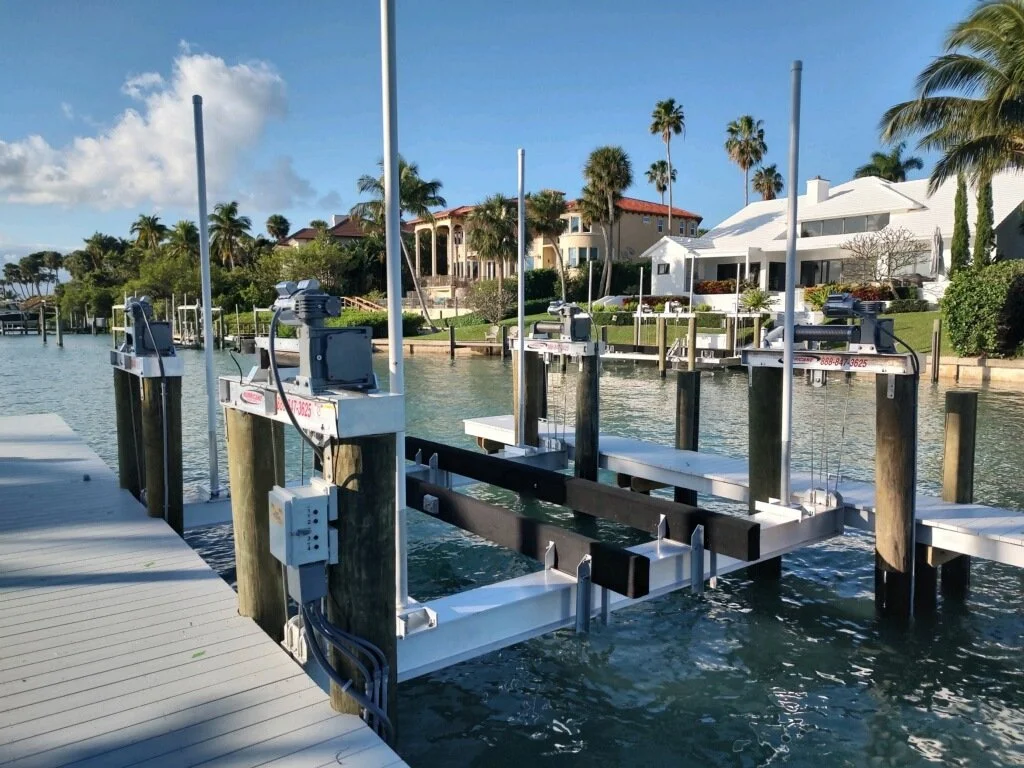
Proper boat lift preparation before hurricane season can help protect vessels, docks, and waterfront infrastructure from storm-related damage. South Florida homeowners should inspect boat lifts, electrical systems, cables, pilings, and dock hardware before severe weather arrives.
Hurricane season in South Florida runs June 1 through November 30. For waterfront homeowners throughout Palm Beach County and Broward County who own boats, that six-month window requires advance planning — not reactive decision-making when a storm is already in the forecast. The decisions you make before a storm threatens your area are more important than anything you can do once a watch or warning is issued.
At JKT Marine Construction we work with South Florida waterfront homeowners on both sides of every storm season — preparing docks, seawalls, and boat lifts before it begins and repairing storm damage after it ends. Here is what our ownership team recommends for protecting your boat and your waterfront investment through South Florida's hurricane season.
Before Hurricane Season: Preparation That Happens in the Spring
The most effective hurricane preparation for South Florida boat owners happens in March, April, and May — not when storm forecasts are already on the news. Here is what to do before June 1.
Inspect your boat lift thoroughly or have it professionally serviced. A lift that is functioning marginally in May is a lift that may fail at the worst possible moment — when you need to rapidly lower your boat to trailer it ahead of an approaching storm, or when you want your boat elevated above surge level during a minor event. Annual professional lift service in the spring gives you confidence in your equipment before the season opens. JKT Marine offers annual lift service throughout Palm Beach and Broward County — call us in March or April and we will assess your lift, lubricate cables, test the motor, and identify any components that need attention before the season.
Inspect your dock and seawall and address any developing problems. A dock with soft spots, rotting boards, or structural concerns is a dock that storm surge and wave action will exploit. A seawall with developing cracks or blocked drainage is a seawall that surge loading will stress more severely than a well-maintained wall. Pre-season professional assessment from JKT Marine is free — and any repair identified is far easier and less expensive to address before a storm than after.
Create and document your storm plan. Know in advance what category storm triggers each level of your response — what you do differently for a tropical storm versus a Category 1 versus a Category 3. Having a documented plan means you make rational decisions in advance rather than emotional decisions under time pressure when a storm is in the forecast.
Assemble emergency contacts. Know your marina's storm policies if applicable. Have your insurance agent's contact and your policy number accessible. Know which local marine contractors provide emergency repair services — JKT Marine provides post-storm emergency service throughout Palm Beach and Broward County.
Know Your Options When a Storm Is Forecast
When a storm system enters the Gulf of Mexico or Atlantic and forecasters identify a potential threat to South Florida, you have options — and the right option depends on the storm's expected intensity and your specific situation.
Leave your boat on the lift for a tropical storm or weak Category 1. A properly maintained boat lift in good structural condition is designed to handle South Florida's normal tidal range and moderate wave conditions. For minor storm events, leaving your boat on the lift — fully elevated, properly secured with additional lines — is often the right choice. Remove canvas, bimini tops, t-tops if possible, and any removable equipment that could become a sail or projectile in wind.
Trailer your boat for Category 2 and above. If you have a trailerable boat — generally anything under 35 feet depending on your tow vehicle and trailer — getting your boat out of the water and to higher ground away from coastal surge zones is the most effective storm protection available. This requires having your trailer in proper working condition, your tow vehicle fueled and ready, and a destination identified before the storm is close enough to create gas station lines and traffic.
Dry storage is the gold standard for larger vessels. If your boat is too large to trailer, a permitted dry storage facility that elevates boats on racks above expected surge levels provides much better protection than leaving a vessel in a wet slip or on a lift. Many South Florida dry storage facilities fill up as storm threats develop — having an established relationship with a facility and understanding their storm procedures before the season is important.
Wet slip in a protected location with proper preparation is a last resort for larger vessels that cannot be trailered or dry-stored. If your boat stays in the water, remove canvas and removable gear, use additional dock lines — doubling or tripling your normal configuration — and position your vessel to minimize swing that could cause it to contact the dock, a piling, or another vessel.
What Never Works: Common Mistakes That Cause Preventable Damage
Leaving canvas up during a storm. Biminis, cockpit covers, and t-tops act as sails in hurricane-force winds. A bimini that survives 10 years of South Florida summers will not survive 100+ mph winds. Remove every piece of canvas from your boat before a storm arrives.
Leaving your boat on a lift during a major hurricane. A boat lift is designed for normal tidal conditions — not for the 5-to-10 foot or greater surge that a major hurricane delivers to South Florida's coastal waterways. A boat left on a lift during a major hurricane in a surge zone faces significant risk of the lift failing under surge loads, the boat floating off the bunks and swinging into structures, or the dock itself failing. For Category 3 and above events affecting your area, remove your boat from the lift.
Waiting too long to make a decision. South Florida's fuel stations, boat ramps, and marina facilities experience dramatic demand surges as storm threats develop. Homeowners who begin their storm preparation 48 to 72 hours before landfall have options. Those who wait until 24 hours before may not. Watch the forecasts early, make decisions early, and execute your plan with margin.
Using inadequate dock lines. A boat that breaks free from its dock during a storm becomes a hazard to itself, to other vessels, and to docks and seawalls throughout the waterway. If your boat is staying in the water, use heavy-gauge dock lines, double or triple your normal line count, and use chafe protection where lines contact dock hardware.
After the Storm: Inspection Before You Use Anything
After any significant storm event passes your area, inspect your dock, lift, and seawall thoroughly before using any of them or putting your boat back in the water.
Look for dock boards that are cracked, shifted, or missing. Look for pilings that have moved position or show impact damage. Look for lift components that have shifted, cable damage, or structural frame damage. Look for seawall cap sections that have moved or cracked, new cracks in panels, or soil erosion behind the wall.
Do not put your boat back on a lift that shows storm damage without having it professionally inspected first. A lift component that looks intact but was stressed by surge loading can fail under normal use conditions after a storm.
JKT Marine provides free post-storm assessments throughout Palm Beach County and Broward County after significant weather events. We assess docks, lifts, and seawalls and provide complete repair quotes for whatever storm damage we find.
Insurance Documentation After a Storm
Document all storm damage with dated photographs before any temporary repairs are made — even emergency repairs. Your insurance claim will be more effectively supported by evidence of the condition immediately after the storm than by photographs taken after temporary work has already been done.
JKT Marine provides detailed written damage assessments with photographs for insurance purposes on every storm damage project. Many Palm Beach County homeowners have used our assessment documentation successfully in property and flood insurance claims following storm events.
JKT Marine Hurricane Season Services
JKT Marine Construction provides pre-season dock, lift, and seawall inspections and maintenance throughout Palm Beach County, Broward County, and Martin County. We provide emerge

Best Boat Lift Brands in South Florida — 2026 Guide
Choosing the right boat lift brand is essential for protecting your vessel and maximizing long-term reliability. Compare the leading boat lift manufacturers used throughout South Florida, including Hurricane, Golden, Hi-Tide, Neptune, and other trusted marine lift systems.
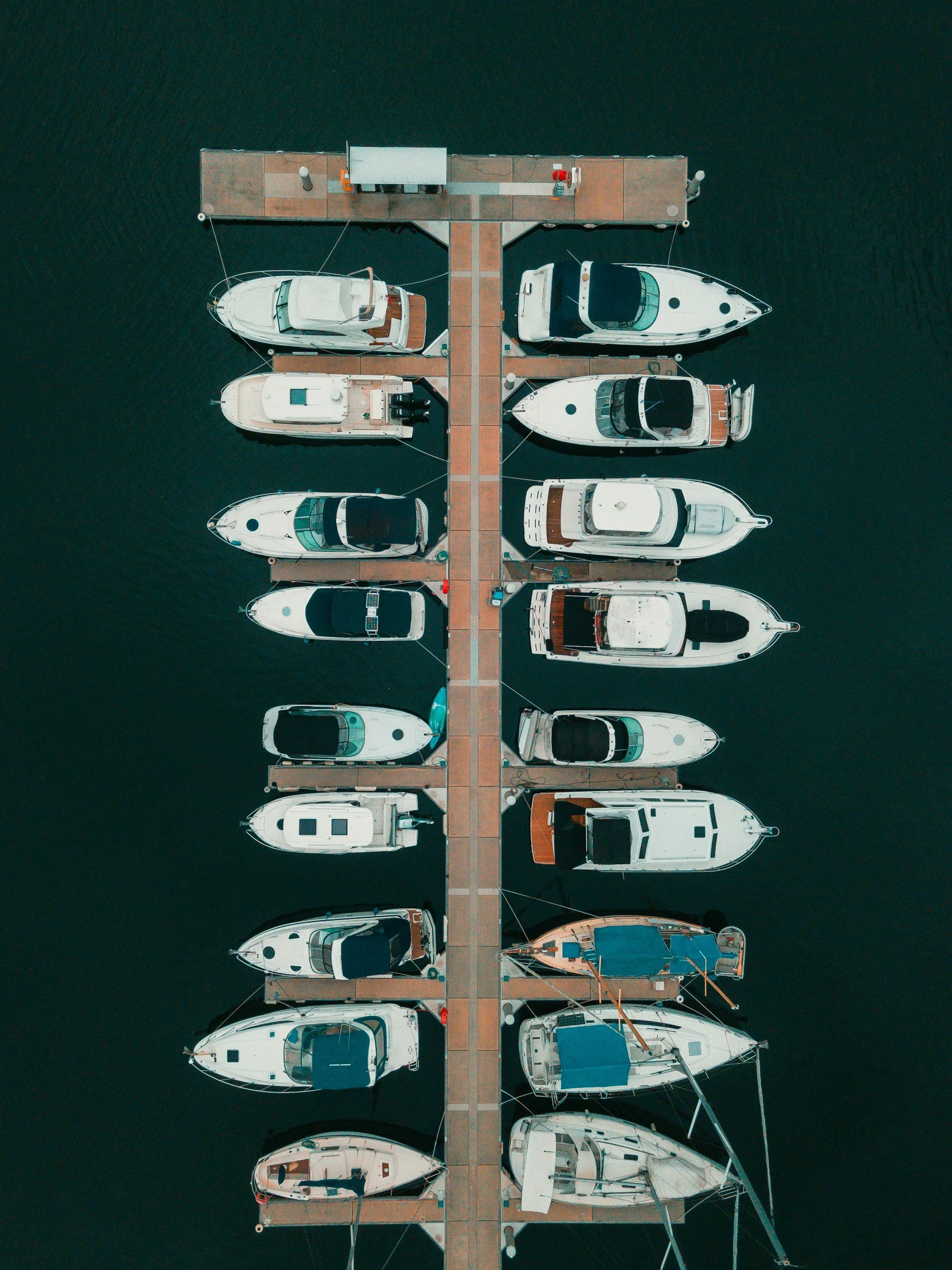
South Florida homeowners have several quality boat lift manufacturers to choose from, including Hurricane Boat Lifts, Golden Boat Lifts, Hi-Tide Boat Lifts, Neptune Boat Lifts, and other trusted marine lift systems. Selecting the right lift depends on vessel size, waterfront conditions, lift capacity requirements, and long-term maintenance considerations.
When South Florida waterfront homeowners ask us which boat lift brand is the best, the honest answer is that it depends on your boat, your waterway, and your priorities. There is no single brand that is objectively best for every situation. But there are clear leaders in specific categories — and understanding what distinguishes each brand helps you make a genuinely informed decision rather than just buying the brand your neighbor has or the one your contractor happens to stock.
At JKT Marine Construction we are authorized dealers and installers for Golden, Hi-Tide, Tide Tamer, Hurricane, Neptune, and Sunstream boat lifts. We work with all of these brands regularly throughout Palm Beach County and Broward County and can give you a straight assessment of where each one excels.
Golden Boat Lifts — Premium Quality, Best Warranty
Golden Boat Lifts manufactures their products in Florida and has been building lifts specifically for South Florida's marine environment for decades. Their product line covers capacities from small PWC lifts through heavy-duty sportfishing lifts exceeding 80,000 lbs, and their manufacturing quality is consistently at the top of the market.
Golden lifts are built with heavier gauge aluminum than most competitors, use higher-spec motors, and carry one of the most comprehensive warranties in the industry. Their 316-grade stainless hardware throughout every system is a significant advantage in South Florida's aggressive saltwater environment — lesser hardware corrodes within a few years in this climate.
The tradeoff is price. Golden lifts cost more than most alternatives at comparable capacities. For homeowners who want the highest quality build, the longest expected service life, and the best warranty support available in the South Florida market, Golden is our most frequent recommendation when budget is not the primary constraint.
Best for: Homeowners who want the best available product and plan to own their waterfront property for many years. Intracoastal-front properties where longevity and structural quality matter most.
Hi-Tide Boat Lifts — Most Widely Used in South Florida
Hi-Tide is the most commonly installed boat lift brand throughout Palm Beach County and Broward County. They have been manufacturing lifts for the South Florida market for decades and their service network throughout the region is the most extensive of any brand — which means parts are readily available and local technicians who know their systems are easy to find.
Hi-Tide builds a solid, reliable product that performs well in South Florida's environment. Their standard motor and cable systems are proven over decades of use in our specific tidal and saltwater conditions. Quality is good across the standard product line and excellent in their premium configurations.
Where Hi-Tide's wide distribution creates a slight quality consideration is in their entry-level products, which use lighter-gauge components than their premium line. When specifying Hi-Tide for a South Florida installation, JKT Marine typically recommends moving up to their commercial or heavy-duty configurations for better longevity in this environment rather than their residential entry products.
Best for: Homeowners who value service network accessibility and want a proven, well-supported product. Canal-front properties with standard tidal conditions.
Tide Tamer — Best Value for Standard Applications
Tide Tamer offers a strong combination of build quality and competitive pricing that makes it one of the best value options in the South Florida boat lift market for standard residential applications. Their 4-post cradle lifts for boats in the 10,000 to 30,000 lb range are well-built, well-priced, and perform reliably in South Florida conditions.
Where Tide Tamer is less competitive is at the high-capacity end of the market — their product line does not extend to the very large custom lifts that Golden or Hi-Tide offer for sportfishing and commercial vessels, and their parts network is somewhat less extensive than Hi-Tide's throughout South Florida.
For a homeowner with a 25-foot to 35-foot center console or dual-console boat on a typical South Florida canal, Tide Tamer frequently offers the best combination of price and quality in our assessment.
Best for: Budget-conscious homeowners with standard-capacity lift requirements. Canal-front properties with boats in the 15,000 to 35,000 lb capacity range.
Hurricane Boat Lifts — Built Specifically for South Florida
Hurricane Boat Lifts is a Florida-based manufacturer that builds specifically for the demanding conditions of South Florida's marine environment. Their products are designed with South Florida's tidal range, saltwater exposure, and hurricane load requirements in mind from the ground up — not adapted from designs developed for other markets.
Hurricane's stainless steel and marine aluminum construction throughout their lift systems is matched to South Florida's environment in a way that products originally designed for less aggressive saltwater climates sometimes are not. Their motor systems are specified for our tidal conditions and their structural components are sized for South Florida's hurricane load requirements.
For Intracoastal-front properties and properties with higher exposure to wind and wave loading, Hurricane's Florida-specific engineering is a genuine advantage.
Best for: Properties with higher environmental exposure — Intracoastal front, inlet-adjacent, or elevated wind exposure locations. Homeowners who value Florida-specific engineering and manufacturing.
Neptune Boat Lifts — Solid Mid-Range Option
Neptune Boat Lifts produces a well-built, competitive product in the mid-range of the South Florida market. Their standard 4-post cradle lifts are competitively priced, constructed with good-quality aluminum and stainless hardware, and perform reliably under normal South Florida canal conditions.
Neptune is a strong choice when the priority is solid performance at competitive pricing without the premium cost of Golden or the specific Florida engineering focus of Hurricane. Their product line covers the capacity range that handles most South Florida residential applications well.
Best for: Homeowners seeking reliable mid-range performance with competitive pricing. Standard residential canal applications with boats in the 10,000 to 40,000 lb range.
Sunstream Boat Lifts — Floating Lift Specialists
Sunstream occupies a unique position in the South Florida boat lift market as the leading manufacturer of floating boat lift systems — specifically their FloatLift product line. Unlike conventional 4-post and vertical lifts that mount to fixed dock structures, Sunstream's floating lifts are moored independently and do not require a fixed dock structure to function.
This makes Sunstream the right solution in specific situations where conventional lift installation is not possible or not permitted — locations where piling installation is restricted, properties without existing fixed docks, or installations where the waterway conditions require a floating rather than fixed-mount approach.
Sunstream floating lifts are well-engineered, proven in South Florida's conditions, and supported by a solid service network. Their capacity limitations — generally up to around 10,000 to 20,000 lbs depending on configuration — mean they are primarily applicable for smaller vessels rather than large center consoles or sportfishing boats.
Best for: Locations where conventional lift installation is not possible. Smaller vessels where floating lift capacity is adequate. Properties where piling installation is restricted by permit conditions.
How JKT Marine Recommends the Right Brand
When a South Florida homeowner asks JKT Marine which lift they should buy, we start with four questions. What is your boat's total weight including fuel, gear, and equipment? What is the water depth at your lift location at low tide? What is your lift's waterway exposure — protected canal, Intracoastal, or something in between? And what is your budget for the installation?
Those answers, combined with our knowledge of each brand's strengths and the specific conditions of your waterway, drive a recommendation that is genuinely matched to your situation — not to what we happen to have in our inventory or what generates the highest margin.
We are authorized dealers for all six brands covered in this guide. That means we can recommend the right one for your situation without being pushed toward any particular product by inventory or incentive considerations.
Get a Free Boat Lift Consultation
JKT Marine Construction installs all major boat lift brands throughout Palm Beach County, Broward County, and Martin County. Free estimates, all permits handled, factory pricing as authorized dealers for every brand we install.
Call (561) 418-0383 or email info@jktmarine.com to schedule your free on-site consultation.
Licensed CGC1537758. Fully insured. Family-owned. Owner on every installation.
Frequently Asked Questions
Which boat lift brand lasts longest in South Florida's saltwater? Golden Boat Lifts consistently offers the highest-specification materials and the most comprehensive warranty in the South Florida market. Hi-Tide's premium commercial line is also highly durable. For standard residential applications, all six brands we carry perform well when properly maintained — the maintenance matters as much as the brand.
How do I know what size boat lift I need? Your lift should be rated for at least 20 to 25 percent more than your boat's total weight — including a full tank of fuel, all gear and equipment, water in livewells, and any other weight that will be on the boat when it is lifted. Never size to your boat's dry weight. JKT Marine calculates the correct capacity during every free estimate.
Are there boat lift brands to avoid in South Florida? We only install brands we are willing to stand behind with our service and warranty support. If a brand is not on our authorized dealer list, we do not install it — not because of exclusivity but because we are not willing to recommend products we cannot fully support after installation.
How often should a boat lift be serviced in South Florida? Annual professional service is recommended for all boat lifts in South Florida's saltwater environment. Cable inspection and lubrication, motor testing, hardware inspection, and bunk alignment check — catching small issues during annual service prevents expensive repairs and unexpected failures.

Dock Permit Requirements in Palm Beach County — What You Need to Know
Planning a new dock, dock repair, boat lift installation, or waterfront improvement in Palm Beach County? Learn about common dock permit requirements, approval processes, environmental considerations, and what homeowners should know before starting a marine construction project.

Most new dock construction, dock expansions, boat lift installations, and significant waterfront improvements require permits and regulatory review. Understanding the permitting process early can help homeowners avoid delays and ensure compliance with local, state, and environmental regulations.
If you are planning to build, replace, or significantly repair a dock on your Palm Beach County waterfront property, navigating the permitting process is one of the most important — and most frequently misunderstood — parts of your project. Dock permits in Palm Beach County are not optional, not a formality, and not something you can skip without serious consequences. Here is exactly what you need to know from the team at JKT Marine Construction, who manages dock permits on behalf of clients throughout Palm Beach County every week.
The Short Answer: Yes, You Need Permits
Virtually every dock construction, replacement, or significant structural repair project in Palm Beach County requires permits. This applies to new dock builds from scratch, full dock replacements even if the footprint stays identical, structural framing and piling work, boat lift installations added to existing docks, dock extensions that change the structure's size or reach, and marine electrical installations.
The only dock work that typically falls below the permit threshold is true like-for-like maintenance — replacing a few damaged boards with identical materials, tightening hardware, cleaning, or painting. As soon as work involves structural members, changes in materials from what was originally permitted, or anything that modifies the dock's size, configuration, or electrical system, permits are required.
If you are uncertain whether your specific project requires a permit, call JKT Marine at (561) 418-0383 before starting any work. We tell you exactly what is needed during the free site assessment — before you commit to anything.
Which Agencies Issue Dock Permits in Palm Beach County?
This is the part of dock permitting that surprises most Palm Beach County waterfront homeowners. Depending on where your property is located and the scope of your project, you may need approvals from several agencies simultaneously — not just one.
Palm Beach County Building Division is the starting point for most residential dock projects in unincorporated Palm Beach County. The county building permit covers the structural construction work.
Municipality Building Departments handle permitting for properties within incorporated cities and towns. If your property is in Jupiter, Palm Beach Gardens, West Palm Beach, Boca Raton, Lake Worth Beach, Boynton Beach, Delray Beach, Lantana, or any other incorporated municipality in Palm Beach County, your building permit comes from that city or town's building department rather than — or in addition to — the county.
The South Florida Water Management District issues Environmental Resource Permits for construction in, on, or over state waters — which includes virtually all of Palm Beach County's tidal canals, the Intracoastal Waterway, and other navigable waterways. SFWMD review is required for the vast majority of dock projects in Palm Beach County.
The Army Corps of Engineers has jurisdiction over navigable waterways — including the Intracoastal Waterway and the waterways connected to it throughout Palm Beach County. Intracoastal-front dock projects typically require Army Corps review, which adds time to the overall permitting process beyond what interior canal projects require.
The Florida Department of Environmental Protection may be involved for projects on ecologically sensitive waterways, in areas with seagrass or coral habitat, or in locations that trigger specific environmental review thresholds under Florida's environmental permitting framework.
How Long Does Dock Permitting Take in Palm Beach County?
Timeline is the most common frustration homeowners experience with dock permitting — and the most important reason to start your project planning early rather than waiting until you are ready to build.
Standard residential canal dock projects in unincorporated Palm Beach County typically take 6 to 10 weeks from application submission to permit issuance when applications are complete and correct at submission.
Projects within incorporated municipalities vary by city. Some Palm Beach County cities process building permits quickly. Others have longer review queues. JKT Marine's experience in specific cities throughout Palm Beach County allows us to set accurate timeline expectations from the start of your project.
Intracoastal Waterway dock projects requiring Army Corps of Engineers review take longer — typically 10 to 16 weeks from application to approval, though Army Corps timelines can vary based on their current workload and the complexity of the specific project.
Projects in environmentally sensitive locations involving FDEP review or Nationwide Permit determinations can take 16 weeks or more.
The bottom line is that dock permitting in Palm Beach County takes time regardless of how straightforward your project is. The homeowners who are most satisfied with their project experience are the ones who start the process 3 to 6 months before they want their dock completed — not 6 weeks before.
What Documents Are Required for a Dock Permit Application?
A complete dock permit application in Palm Beach County typically requires a current survey of your property showing the shoreline and waterway, engineering drawings prepared by a licensed professional engineer showing the dock design and structural specifications, a site plan showing setbacks from property lines and adjacent structures, documentation of waterway classification for the body of water the dock will be on, and in many cases a manatee protection plan or speed zone verification for the waterway.
JKT Marine prepares and submits all permit documentation on your behalf. We work with licensed marine engineers for all required engineering drawings and have direct working relationships with the relevant agencies throughout Palm Beach County. A complete, correct application at first submission is the single most important factor in avoiding permit processing delays — incomplete applications are returned for correction, adding weeks to your timeline.
What Are the Consequences of Building Without a Permit?
The consequences of unpermitted dock construction in Palm Beach County are serious, well-documented, and consistently more expensive than doing the project correctly in the first place.
Stop-work orders issued by the county or municipality halt the project immediately. The structure may be required to be removed at the owner's expense before permitted work can begin — meaning you pay for demolition of unpermitted work before paying for the legitimate permitted replacement.
Fines accumulate under Florida's building code enforcement framework. Code violation fines for structural unpermitted work can be substantial and continue to accumulate daily until the violation is resolved.
Real estate transactions are complicated by unpermitted structures. Florida law requires disclosure of known unpermitted work in real estate transactions. Buyers' lenders and inspectors regularly discover unpermitted dock work through Palm Beach County permit records searches. Unpermitted structures either require retroactive permitting — a difficult and expensive process — or reduce the property's value as a disclosed deficiency.
Homeowner's insurance coverage may be compromised. Insurers who discover unpermitted structural work may deny claims related to damage to that structure and in some cases may use unpermitted construction as grounds to reduce or deny broader property claims.
JKT Marine Handles All Dock Permitting In-House
When you hire JKT Marine Construction for your Palm Beach County dock project, the entire permitting process is managed by our team from the first day of the project through final inspection sign-off. We identify which agencies have jurisdiction over your specific property and project. We prepare all permit applications and engineering documentation. We submit to all required agencies and follow up throughout the review process. We schedule and coordinate all permit inspections. We deliver your complete permit package to you at project completion.
You never contact a regulatory agency directly during your JKT Marine project. That is not a marketing claim — it is what our clients actually experience on every project we complete throughout Palm Beach County.
Licensed CGC1537758. Fully insured. Family-owned. Free estimates throughout Palm Beach County. Call (561) 418-0383 or email info@jktmarine.com.
Frequently Asked Questions
Do I need a permit to add a boat lift to my existing dock in Palm Beach County? Yes. Boat lift installation is a permitted activity in Palm Beach County requiring building permits and in most cases SFWMD review. JKT Marine handles all boat lift permitting on the projects we install.
How much do dock permits cost in Palm Beach County? Permit fees for a residential dock project in Palm Beach County typically run $1,500 to $5,000 in total agency fees depending on project scope and which agencies are involved. JKT Marine includes permit fee management in every project quote.
Can I get a permit for an existing unpermitted dock? Retroactive permitting for unpermitted dock structures is possible in some situations but is typically more complex and expensive than the original permitting would have been. If you have an unpermitted dock structure you want to regularize, call JKT Marine for an honest assessment of the options.
What is a manatee protection plan and do I need one for my dock permit? Florida's manatee protection requirements apply to dock projects in waterways designated as manatee habitat — which includes many tidal canals and all of the Intracoastal Waterway throughout Palm Beach County. A manatee protection plan documents compliance with speed zone requirements and construction timing windows. JKT Marine prepares this documentation as part of the permit package for projects that require it.
How Much Does Dock Repair Cost in South Florida? (2026 Guide)
If you are a waterfront homeowner in South Florida dealing with a damaged or deteriorating dock, one of the first questions you need answered is how much is this going to cost? The answer depends on what type of repair you need, the size of your dock, and the materials involved. This 2026 guide gives you real cost ranges based on what we see every day at JKT Marine Construction throughout Palm Beach County and Broward County.
Dock Repair Cost Ranges in South Florida (2026)
Board replacement (per board) — $50 to $150 per board including labor and materials. A handful of damaged boards is a minor repair. A dock where most boards need replacing is essentially a full redeck.
Full dock redeck — $8,000 to $25,000 for most residential docks depending on size and material choice. Composite decking runs higher than pressure-treated wood but lasts significantly longer in South Florida's environment.
Structural joist and stringer repair — $3,000 to $15,000 depending on how many members need replacement and accessibility. Rotted or damaged structural framing underneath your deck surface requires more labor than surface replacement.
Single piling replacement — $1,500 to $4,000 per piling including installation. Concrete pilings cost more than wood but last significantly longer.
Multiple piling replacement — $8,000 to $25,000 or more depending on number of pilings, piling type, and site conditions.
Storm damage repair — $5,000 to $40,000 or more depending on the extent of damage. A dock that took a direct hit from storm debris or surge may need structural assessment and significant rebuilding.
Dock hardware replacement — $500 to $3,000 for cleats, ladders, bumpers, and associated hardware depending on what needs replacing.
Marine electrical repair — $500 to $5,000 depending on the scope. Shore power issues, corroded connections, and lighting problems are the most common electrical repairs.
What Affects Dock Repair Cost Most?
The single biggest driver of dock repair cost is how far the damage has progressed. A dock that is caught early — a few soft boards, some surface weathering — is a minor repair. The same dock left for two or three more South Florida storm seasons may need structural work and piling replacement that costs five to ten times as much.
This is why annual inspection of your dock is one of the most cost-effective things a South Florida waterfront homeowner can do. The inspection itself is free when you call JKT Marine. What we find during that inspection tells you whether you have a $2,000 board replacement situation or a $15,000 structural repair on your hands — and catching it at $2,000 is always better than waiting until it is $15,000.
Repair vs Full Replacement — How to Decide
The general rule we use at JKT Marine is straightforward. If the repair cost exceeds 60 to 70 percent of full replacement cost, full replacement is usually the better investment. A repaired dock with underlying structural limitations will need attention again in a few years. A new dock built with marine-grade materials starts your clock over for 25 to 50 or more years.
For docks where the pilings and structural framing are sound, a surface redeck is almost always the right answer. Replace the decking, update the hardware, and you have a dock that looks and performs like new for a fraction of full replacement cost.
For docks where the pilings are failing, the framing is structurally compromised, or damage is widespread throughout every component, full replacement is frequently both the honest recommendation and the more cost-effective long-term decision.
JKT Marine never recommends replacement when repair is genuinely sufficient. Our reputation throughout Palm Beach and Broward County is built on homeowners who trusted our assessment and felt that trust was earned.
The Most Common Dock Repairs in South Florida
Full redecks are the single most common dock repair we perform throughout Palm Beach County and Broward County. South Florida's combination of saltwater, UV radiation, and moisture turns even well-built pressure-treated wood decks into soft, weathered, splintering surfaces within 10 to 15 years. A composite redeck on sound structural framing gives a dock a fresh 25 to 50-year surface life.
Piling replacement is the second most common structural repair. Wood pilings in South Florida's marine environment are vulnerable to marine boring organisms — primarily shipworms — that attack the wood below the waterline. By the time surface damage is visible above the waterline, significant boring damage may already exist below it. Concrete and composite pilings avoid this threat entirely.
Storm damage repair spikes after every named storm event that affects South Florida. Floating debris, surge loading, and wave action from tropical systems damage dock decking, framing, hardware, and electrical systems in ways that range from cosmetic to fully structural depending on the storm's intensity and the dock's exposure.
How Long Does Dock Repair Take?
A straightforward full redeck on an average residential dock in South Florida takes one to two days from material delivery to completion. Structural framing repairs take two to four days depending on scope. Piling replacement adds one to two days for the pile driving work before framing and decking can be addressed.
Permit requirements — which apply to structural dock repairs but generally not to like-for-like surface redecking — add 4 to 8 weeks to the timeline for projects that require them.
JKT Marine assesses permit requirements for every project during the free site visit and tells you exactly what your specific repair requires before you commit to anything.
What About Insurance Coverage?
Dock damage from named storm events may be covered under your homeowner's policy, flood insurance, or both depending on your specific coverage. JKT Marine provides detailed written repair assessments with photographs that document the scope and cause of storm-related dock damage — documentation that supports insurance claims throughout the process.
We recommend contacting your insurance carrier and documenting the damage with photographs before any emergency repairs are made when storm coverage may apply.
Get a Free Dock Repair Assessment
JKT Marine Construction provides free on-site dock assessments throughout Palm Beach County, Broward County, and Martin County. We evaluate your dock honestly, tell you what it needs and what it costs, and give you a clear recommendation without pressure or obligation.
Licensed CGC1537758. Fully insured. Family-owned. Owner personally on every job. Call (561) 418-0383 or email info@jktmarine.com.
Frequently Asked Questions
How do I know if my dock needs repair or full replacement? The key factors are the condition of the pilings and structural framing. If the pilings are solid and the framing is intact, a surface redeck is usually the right answer. If pilings are failing or framing is structurally compromised throughout, replacement is often more cost-effective. A free JKT Marine assessment gives you a definitive answer.
Does dock repair require a permit in South Florida? Like-for-like surface redecking typically does not require a permit. Structural framing repairs, piling replacement, and any work that changes the dock's configuration or footprint generally does. JKT Marine determines what your specific repair requires and handles all permit filings when needed.
How long does a dock redeck last in South Florida? A composite or PVC redeck lasts 25 to 50 years in South Florida's marine environment with minimal maintenance. A pressure-treated wood redeck lasts 10 to 15 years with regular sealing and maintenance.
Do you repair docks after storm damage in South Florida? Yes. Storm damage repair is one of our most common emergency services. Call (561) 418-0383 and we will assess your dock and provide a complete repair quote fast.
Floating Dock vs Fixed Dock — Which Is Right for Your South Florida Property?
If you are planning a new dock for your South Florida waterfront property, one of the first decisions you will face is whether to build a fixed dock or a floating dock. Both are common throughout Palm Beach County and Broward County. Both can serve you well for decades. But they are genuinely different structures suited to different situations — and choosing the wrong type for your property can create real problems.
Here is a complete comparison from the team at JKT Marine Construction to help you make the right decision for your specific property and needs.
What Is a Fixed Dock?
A fixed dock is supported by pilings driven into the waterway bottom. The dock surface sits at a fixed height above the water regardless of tidal conditions. Fixed docks are the traditional standard for South Florida waterfront properties and remain the most common type throughout the region.
Fixed docks are rigid, permanent structures. They provide a stable surface that does not move with wave action or vessel weight. They accommodate boat lifts easily and naturally. And they handle South Florida's tidal range — typically 1 to 3 feet in most areas — without issue when built at the correct height.
What Is a Floating Dock?
A floating dock is supported by flotation chambers — typically foam-filled polyethylene floats — that keep the dock surface at a consistent height relative to the water surface regardless of tidal level. The dock rises and falls with the tide, maintaining the same freeboard at all times.
Floating docks are moored to fixed anchor points — pilings, shore anchors, or a combination — using lines or guide post systems that allow vertical movement while keeping the dock in position.
Fixed Dock — Advantages
Stability is the primary advantage of a fixed dock. A fixed dock does not move, rock, or shift with vessel traffic or wave action. This is important for older users, for families with children, and for anyone who values a completely stable surface to work on.
Fixed docks naturally accommodate standard boat lifts — 4-post and vertical lifts mount directly to the dock structure. This is why fixed docks are overwhelmingly dominant in South Florida, where boat lift ownership is extremely common.
Fixed docks are generally lower maintenance than floating docks once installed. There are no flotation chambers to inspect, no mooring lines to check and replace, and no moving connection points between the dock and its anchors.
For permanent structures on established waterfront properties, a well-built fixed dock with concrete pilings and composite decking is the highest-quality, longest-lasting solution available.
Fixed Dock — Disadvantages
Fixed docks require pilings, which means pile driving — a more complex and expensive installation process than floating dock anchoring. In locations where piling installation is restricted by permitting — some protected waterways, areas with underground utilities, or locations with extremely hard substrate — fixed dock installation may not be possible.
The height of a fixed dock is permanent. If the dock is built at the wrong height relative to your boat's freeboard, the mismatch is difficult and expensive to correct. Good dock design accounts for your specific vessel's needs from the beginning.
Fixed docks require permits and in most cases are permanent structures that become part of your property — which is generally an asset but means they cannot be easily relocated.
Floating Dock — Advantages
The defining advantage of a floating dock is consistent access height. The dock surface stays at the same level relative to the water regardless of tidal conditions. For properties with significant tidal range — more than 2 to 3 feet — this can make boarding and off-boarding a vessel meaningfully easier.
Floating docks are generally less expensive to install than fixed docks of the same surface area because they do not require pile driving. In locations where piling installation is not practical or not permitted, a floating dock may be the only viable option.
Floating dock systems are modular and can often be reconfigured or expanded more easily than a fixed structure.
Floating Dock — Disadvantages
Movement is the primary disadvantage of a floating dock. The dock moves with wave action, tidal current, and vessel weight. This movement is minor in calm canal conditions but becomes more pronounced on exposed Intracoastal properties or in areas with significant boat traffic. For users who find moving surfaces uncomfortable — older homeowners, those with balance concerns, anyone carrying heavy loads — this is a real limitation.
Floating docks require more regular maintenance than fixed docks. Flotation chambers need periodic inspection and eventual replacement. Mooring lines and connection hardware need regular checking and replacement. Guide post sleeves and bushings wear over time.
Boat lift compatibility is more limited with floating docks. Standard 4-post lifts typically require a fixed structure. There are floating lift systems available — Sunstream's FloatLift is a common example in South Florida — but they are more expensive than equivalent fixed lifts and have capacity limitations compared to fixed lift systems.
Which Is Right for Your South Florida Property?
For most South Florida waterfront properties — fixed dock is the right answer. South Florida's tidal range is modest enough that a properly designed fixed dock provides excellent access to your vessel at all tide conditions. Fixed docks are more stable, naturally compatible with the full range of boat lift options, lower maintenance over time, and generally the higher-quality permanent installation.
Choose a floating dock when pilings cannot be installed due to permitting restrictions or site conditions, when you want a less expensive installation and the movement tradeoffs are acceptable for your situation, when you have a property where dock configuration may need to change over time, or when tidal range at your specific location is significant enough that fixed-height access creates real inconvenience.
What About a Combination Approach?
Some South Florida properties use a combination — a fixed main dock structure for stability and boat lift compatibility, with a floating finger pier or boarding platform attached for easier vessel access at varying tide levels. This is more common on properties with larger tidal fluctuation or with specific vessel types where boarding height is a significant concern.
Get a Free Dock Consultation
JKT Marine Construction builds fixed and floating docks throughout Palm Beach County and Broward County. We will assess your specific property — water depth, tidal range, vessel type, permitting requirements, and budget — and recommend the right approach for your situation. No pressure, no obligation.
Licensed CGC1537758. Fully insured. Owner on every project. Call (561) 418-0383 or email info@jktmarine.com for your free consultation.
Frequently Asked Questions
Can a floating dock support a boat lift? Standard 4-post boat lifts require a fixed structure. There are floating lift systems — like Sunstream's FloatLift — designed for use with floating docks, but they have capacity limitations and cost more than equivalent fixed lifts. For most South Florida homeowners who want a boat lift, a fixed dock is the practical choice.
How long does a floating dock last in South Florida? A quality floating dock with marine-grade decking and properly maintained flotation systems can last 20 to 30 years in South Florida conditions. The flotation chambers typically need replacement every 15 to 25 years depending on UV exposure and maintenance.
Do floating docks require permits in Palm Beach County? Yes. Floating docks require the same permits as fixed docks in Palm Beach County, including SFWMD review. JKT Marine handles all permitting for both dock types.
Is a floating dock or fixed dock better for resale value? Both add value to waterfront properties. A well-built fixed dock with a boat lift typically commands more value than a floating dock without lift capability, simply because boat lift ownership is so common among South Florida waterfront buyers. Condition matters more than type — a well-maintained floating dock is more valuable than a deteriorating fixed dock.
What Causes Seawall Damage in South Florida?
South Florida has more miles of residential seawall than almost any other region in the country. Waterfront properties throughout Palm Beach County and Broward County depend on these structures to protect their land, landscaping, docks, and homes from the water. Yet seawall damage is extremely common — and it is not always the result of major storms. Many of the forces that cause seawall damage in South Florida are slow, relentless, and invisible until the damage is already significant.
Understanding what causes seawall damage helps you catch problems early and make informed decisions about repair, maintenance, and replacement. Here is a complete breakdown from the team at JKT Marine Construction.
1. Tidal Movement and Hydrostatic Pressure
The most constant force acting on your seawall is the daily cycle of tides. Every time the tide rises, water pressure pushes against the face of your seawall from the canal or Intracoastal side. Every time the tide drops, the water-saturated soil behind your wall pushes in the opposite direction. This bidirectional pressure cycle happens twice a day, 365 days a year, for the lifetime of your seawall.
Over time, this constant pressure cycling works at the connections between panels, at the cap, and at the tieback anchors that hold the wall in position. In concrete seawalls it creates stress points that eventually crack. In vinyl seawalls it works at the interlocks between sheets. Even a well-built seawall is constantly fighting this force — which is why maintenance and inspection matter.
2. Saltwater Corrosion
South Florida's saltwater is extraordinarily corrosive to metals. The rebar inside concrete seawall panels is the most vulnerable point in most older seawalls throughout the region. Here is what happens.
Concrete is naturally alkaline, which initially protects the steel rebar inside from corrosion. But over time, saltwater penetration through cracks, voids, or the concrete matrix itself reaches the rebar. Once the rebar begins to corrode it expands — and expanding steel inside concrete is devastating. The expanding rebar cracks the concrete from the inside, creating larger cracks that allow more water to reach the rebar faster. The cycle accelerates until panels fail structurally.
This is one of the primary reasons vinyl seawalls have largely replaced concrete for residential applications in South Florida. Vinyl has no steel to corrode.
3. Soil Erosion Behind the Wall
The soil behind your seawall is what gives it structural stability. The wall holds the soil in place, and the soil provides resistance against the hydrostatic pressure from the water side. When soil erodes from behind the wall, the wall loses its backing and becomes vulnerable to failure.
Soil erosion behind South Florida seawalls happens in several ways. Water that seeps through cracks in the wall carries fine soil particles with it each time the tide rises and falls — a process called piping. Heavy rainfall saturates the soil behind the wall, increasing the weight and pressure it exerts on the structure. Boat wakes generate pressure waves that repeatedly impact the wall and the soil behind it. Tree roots near the seawall can create pathways for water to penetrate behind the wall.
Signs of soil erosion behind your seawall include soft spots or sinkholes in your yard near the water's edge, visible voids behind the wall, and a wall that is beginning to lean or tilt toward the water.
4. Hurricane and Tropical Storm Damage
South Florida's hurricane season brings storm surge, extreme winds, and wave action that can damage even well-maintained seawalls in hours. Storm surge — the rise in water level caused by a hurricane's wind field — subjects seawalls to water levels far above their normal operating range. The soil behind the wall, which is designed to provide resistance against normal tidal forces, may be partially or completely submerged during surge events, dramatically reducing the wall's structural resistance.
Wave action during storms generates impact forces against the seawall face repeatedly and rapidly. Even walls that survive a storm structurally often have new cracks, shifted panels, or damaged caps that need attention afterward.
After any significant storm, a seawall inspection is strongly recommended — even if the damage is not immediately visible to the eye.
5. Boat Wake and Vessel Traffic
Every boat that passes your property generates a wake. Canal properties in Palm Beach and Broward County with higher vessel traffic experience significantly more wake impact on their seawalls than quieter canal properties. Each wake generates a pressure pulse against the seawall face — and over years of repeated impact, this contributes to cracking, joint stress, and accelerated wear.
This is particularly relevant for properties near inlets, navigable channels, or popular waterways where vessel traffic is constant. If you are on a high-traffic waterway, your seawall experiences forces that a quiet residential canal property does not.
6. Vegetation and Root Damage
Trees and large shrubs planted near seawalls create hidden threats over time. Root systems grow toward water and can reach behind or under a seawall, creating channels that allow water and soil to move through the wall. Roots can also exert direct pressure against the wall face or the cap, eventually causing cracking or displacement.
Palms, sea grapes, and other common South Florida waterfront plantings are generally lower risk than larger trees with aggressive root systems. If you have large trees near your seawall, periodic inspection of the area where the roots might intersect with the wall structure is worthwhile.
7. Age and Material Degradation
Every seawall has a finite lifespan. Concrete seawalls in South Florida typically last 30 to 50 years when properly maintained. Vinyl seawalls last 50 or more years. But as materials age, they become more vulnerable to all of the above forces. A 40-year-old concrete seawall that handled normal tidal pressure and wake impact fine for decades may begin showing rapid deterioration once micro-cracking becomes established.
If your seawall is approaching 25 to 30 years old, annual inspections become more important — and planning for eventual replacement becomes a reasonable financial consideration.
Early Detection Saves Money
The common thread in all of these damage causes is that they get worse over time, not better. A small crack that allows minimal water intrusion today creates the conditions for accelerated damage next year. Early detection through regular inspection is the most cost-effective approach to seawall ownership in South Florida.
JKT Marine Construction provides free seawall inspections throughout Palm Beach County and Broward County. We assess your seawall honestly, explain what we find in plain language, and give you real cost numbers for any repairs needed. No pressure, no obligation.
Licensed CGC1537758. Fully insured. Owner on every project. Call (561) 418-0383 or email info@jktmarine.com.
Frequently Asked Questions
How do I know if my seawall is damaged? Common visible signs include cracks in the face or cap, soil erosion or sinkholes behind the wall, the wall leaning toward the water, rust staining from corroding rebar, and water seeping through the wall during high tide. A professional inspection can identify subsurface damage not visible to the eye.
Can seawall damage get worse quickly? Yes. Seawall damage typically accelerates once it begins. A small crack that allows minimal water intrusion creates conditions for faster erosion and structural deterioration. What was a minor repair a few years ago can become a major one quickly — especially after a storm season.
Does boat wake really damage seawalls? Over time yes. Individual wakes are minor impacts, but years of repeated impact on a seawall contributes to fatigue, particularly at joints and connections. Properties on high-traffic waterways may see accelerated wear compared to quieter canals.
How often should I have my seawall inspected in South Florida? Every 3 to 5 years for newer seawalls, annually for seawalls over 20 to 25 years old. Always inspect after a significant storm.

Best Dock Materials for South Florida Saltwater — 2026 Guide
Choosing the wrong dock material in South Florida's saltwater environment is an expensive mistake. This 2026 guide breaks down the best materials for longevity, cost, and performance on canals, the Intracoastal, and open water — so you can make the right call before you build.
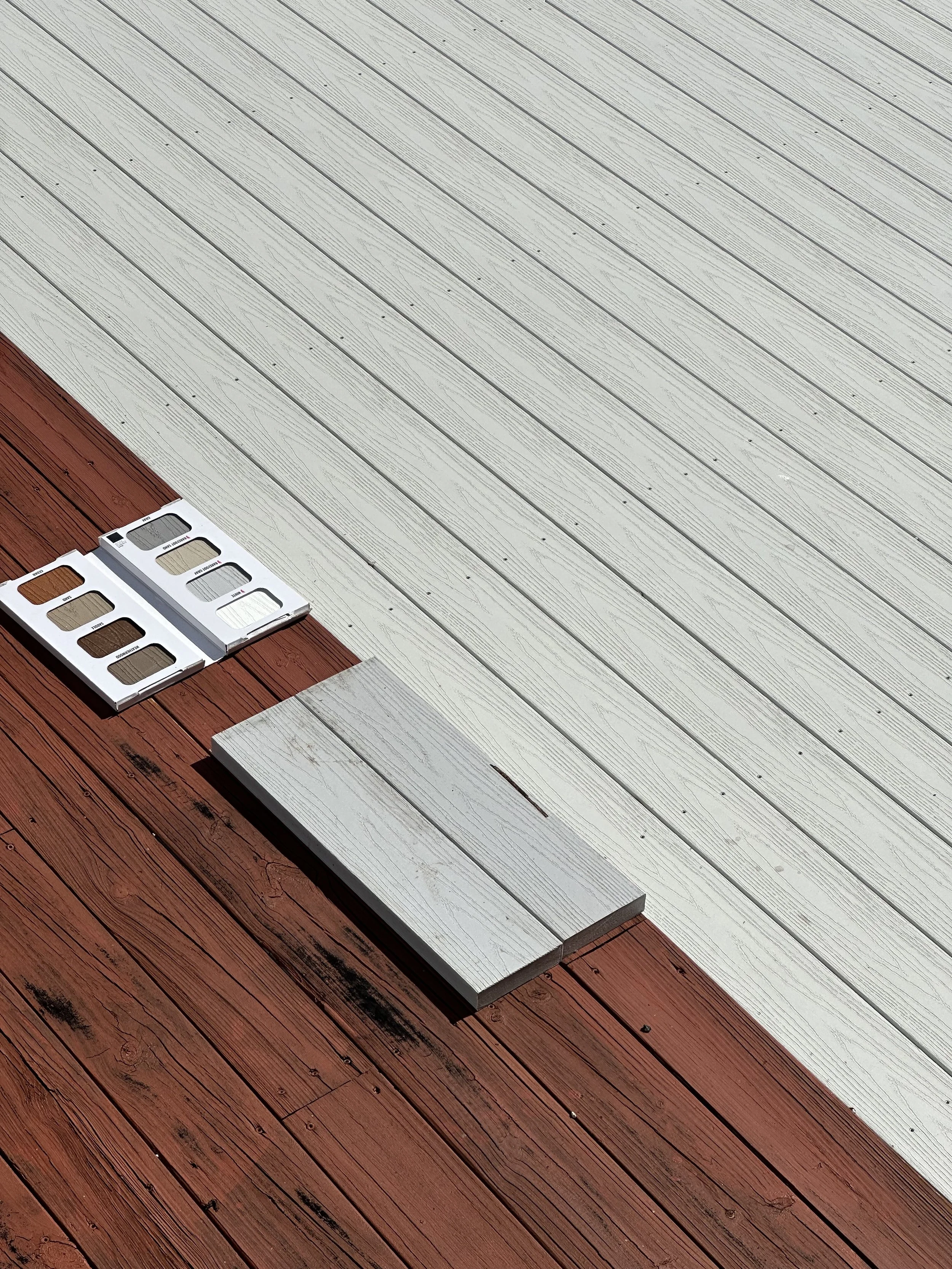
Choosing the right materials for your South Florida dock is one of the most important decisions you will make — and one of the most consequential. The wrong materials in South Florida's saltwater environment do not just look bad after a few years. They fail structurally, creating safety hazards and requiring expensive early replacement. The right materials last decades with minimal maintenance.
Here is a complete guide to dock materials for South Florida's saltwater environment from the team at JKT Marine Construction.
The Challenge: South Florida's Environment Is Brutal on Materials
Before getting into specific materials, it helps to understand what your dock is up against. South Florida's marine environment combines saltwater exposure, intense UV radiation from year-round sun, high humidity, tropical storm surge and wind loading, marine organisms including barnacles and wood-boring organisms, and significant thermal expansion and contraction from temperature swings. Materials that perform well in other parts of the country often fail prematurely in South Florida. What works in the Chesapeake or the Pacific Northwest does not necessarily work in Palm Beach County.
Decking Materials
Composite Decking — Highly Recommended
Marine-grade composite decking is the top choice for South Florida dock surfaces. Made from a blend of wood fiber and recycled plastic, it is engineered to resist moisture, UV radiation, salt, and marine organisms. It does not rot, warp, splinter, or require sealing or staining.
Top composite brands for South Florida docks include WearDeck, which is engineered specifically for marine applications and is one of the best options available. Trex, the industry leader with a 25-year fade and stain warranty. TimberTech AZEK, a premium all-PVC option with outstanding UV and moisture resistance. And Fiberon, which offers solid marine-grade performance at competitive pricing.
Cost runs $18 to $35 per square foot installed. Lifespan is 25 to 50 or more years. Maintenance is minimal — an occasional rinse.
PVC Decking — Also Recommended
Pure PVC decking contains no wood fiber at all, making it completely immune to rot and moisture absorption. It is the most waterproof option available and performs exceptionally well in South Florida's marine environment. Slightly more expensive than composite but worth it for properties with the most demanding conditions.
Pressure-Treated Wood — Acceptable But Not Ideal
Pressure-treated lumber is still widely used for dock decking in South Florida and remains a legitimate option for budget-constrained projects. However, it requires sealing every 1 to 3 years to maintain appearance and resist checking. It grays and cracks from UV exposure without maintenance. It develops splinters as it ages — a hazard for bare feet. It has a lifespan of 10 to 20 years in South Florida conditions versus 25 to 50 or more for composite.
For most South Florida homeowners, the higher upfront cost of composite pays for itself in reduced maintenance and longer lifespan within 10 to 15 years.
Tropical Hardwoods — Beautiful But High Maintenance
Ipe, teak, and other tropical hardwoods are beautiful and naturally resistant to rot and insects. However, they require annual oiling or sealing to maintain their appearance, they are expensive, and they are significantly heavier than composite. For homeowners who love the natural wood look and are willing to maintain it, tropical hardwoods are a premium option. For those who want low maintenance, composite wins every time.
Structural Materials — Pilings
Concrete Pilings — Best Overall for South Florida
Concrete pilings are the most durable structural option for South Florida docks. They resist saltwater corrosion, marine boring organisms, and physical impact better than any other piling type. They are heavier and more expensive to install than alternatives but provide the longest lifespan — 50 or more years when properly made.
Concrete pilings are the preferred choice for permanent docks, Intracoastal-front properties, and any application where longevity is the priority.
Composite Pilings — Excellent Alternative
Composite or fiberglass pilings offer similar corrosion resistance to concrete with lighter weight and easier installation. They do not corrode, are not susceptible to marine borers, and carry a lifespan comparable to concrete. A growing number of dock builders are specifying composite pilings for South Florida projects because of their performance and installation advantages.
Pressure-Treated Wood Pilings — Common But Limited Lifespan
Pressure-treated wood pilings are the most common type in South Florida and are still used regularly. However, their lifespan in South Florida's marine environment is 15 to 25 years — significantly shorter than concrete or composite. Marine boring organisms including shipworms are a serious threat to wooden pilings in South Florida waterways, even with pressure treatment. For dock replacements, most experienced marine contractors now specify concrete or composite pilings when the client's budget allows.
Hardware and Fasteners
This is an area where many dock builders cut costs — and homeowners pay for it later. Every fastener, bracket, and piece of hardware on your dock must be marine-grade stainless steel or hot-dipped galvanized at minimum. Standard hardware store zinc-coated fasteners will rust within one to two years in South Florida's saltwater environment, staining your decking and eventually failing structurally.
At JKT Marine Construction we use 316-grade stainless steel fasteners on all projects — the highest corrosion resistance available for marine hardware. This is not negotiable on any project we build.
JKT Marine's Material Recommendations for South Florida Docks
Decking — WearDeck marine-grade composite or TimberTech AZEK PVC as our top choices. Trex and Fiberon composite as strong alternatives. Pressure-treated wood for budget-constrained projects.
Pilings — Concrete as the top choice for longevity. Composite as an excellent alternative. Pressure-treated wood only when budget requires it, with clear communication about expected lifespan.
Fasteners — 316-grade stainless steel throughout. No exceptions.
Structural framing — Pressure-treated lumber is standard and appropriate for dock framing when properly specified. Composite framing members are available as a premium upgrade.
Get a Free Dock Material Consultation
JKT Marine Construction builds docks throughout Palm Beach County and Broward County using only marine-grade materials rated for South Florida's environment. We will walk you through your options honestly and help you make the right choice for your budget and goals. Licensed CGC1537758, fully insured, owner on every project.
Call (561) 418-0383 or email info@jktmarine.com for a free estimate.
Frequently Asked Questions
What is the most low-maintenance dock decking for South Florida? Marine-grade composite or PVC decking requires the least maintenance. An occasional rinse with fresh water is typically all that is needed. No sealing, staining, or annual treatment required.
How long do composite pilings last in South Florida? Quality composite or fiberglass pilings installed correctly in South Florida typically last 40 to 60 or more years — comparable to concrete and significantly longer than pressure-treated wood.
Is Trex good for boat docks? Yes — Trex makes specific marine and dock collections engineered for wet and saltwater environments. Standard residential Trex is not designed for submerged or constantly wet conditions. Always specify marine-grade composite for dock applications.
What causes dock pilings to fail in South Florida? The two main causes of piling failure in South Florida are marine boring organisms — primarily shipworms — that attack wood pilings from below the waterline, and physical impact from boat traffic or storm debris. Concrete and composite pilings are not susceptible to marine boring organisms, which is a significant advantage over wood in South Florida waterways.
How to Maintain Your Boat Lift in South Florida
A boat lift is one of the best investments a South Florida waterfront homeowner can make. It keeps your hull clean, protects your boat from storm surge, and eliminates the constant maintenance that comes with leaving a vessel in the water full time. But the lift itself needs regular maintenance to perform reliably and reach its full potential lifespan.
South Florida's saltwater environment is one of the most demanding in the world for mechanical equipment. Lifts that are maintained properly last 20 to 30 or more years. Lifts that are neglected fail early, often at the worst possible moment — when you are trying to launch before a fishing trip or lower your boat ahead of an approaching storm.
Here is a complete boat lift maintenance guide for South Florida homeowners from the team at JKT Marine Construction.
Monthly Maintenance — Do This Yourself
Visual Cable Inspection
Look at your lift cables monthly. You are looking for individual wire strands that are broken or fraying, visible corrosion or rust discoloration, kinks or bends in the cable that do not straighten, and areas where the cable appears thinner than the rest. A single broken strand is a warning. Multiple broken strands mean the cable needs immediate replacement before it fails completely.
Clean the Motor Housing
Rinse the motor housing with fresh water monthly. Salt deposits and marine growth accumulate on external surfaces and, over time, can work their way into vents and seams. A quick rinse after every few uses and a thorough rinse monthly is all it takes.
Check All Visible Hardware
Look at your bunks, the cradle frame, guide posts, and all fasteners. Tighten any loose bolts you find. Look for signs of corrosion on hardware that should be stainless — early-stage rust on hardware that should not be rusting is a sign that inferior fasteners were used or that something needs attention.
Test the Limit Switches
Most motorized boat lifts have upper and lower limit switches that stop the motor at the correct positions. Test them monthly to confirm they are working correctly. A limit switch that fails can allow the motor to run past its stop point, causing cable damage or motor burnout.
Quarterly Maintenance
Cable Lubrication
Boat lift cables in South Florida's saltwater environment need regular lubrication to prevent corrosion from the inside out. Apply a marine-grade cable lubricant or penetrating oil to the full length of each cable every 3 months. Work it in along the length of the cable so it penetrates between the individual wire strands. This is one of the highest-value maintenance tasks you can perform — lubricated cables last significantly longer than unlubricated ones in saltwater.
Motor Oil Check
If your lift motor uses an oil-lubricated gearbox, check the oil level quarterly. Dark or milky oil suggests water contamination and should be changed. Refer to your lift manufacturer's manual for the correct oil type and capacity.
Bunk Inspection
Inspect the carpet or rubber covering on your bunks quarterly. Worn, torn, or delaminating bunk material can scratch or damage your hull. Replacement bunk carpet is inexpensive — replacing it when needed costs far less than hull repairs.
Annual Professional Service
Annual professional maintenance is the single most effective thing you can do to maximize your lift's lifespan and catch problems before they become expensive failures.
A professional annual service by JKT Marine includes a complete cable inspection and measurement — cables that have stretched or show wear are flagged for replacement. Motor testing including amperage draw measurement — a motor drawing more current than specified is working harder than it should and may be failing. Full hardware inspection including all fasteners, sheaves, and pulleys. Lubrication of all moving parts. Bunk alignment check and adjustment. Electrical inspection including switches, wiring, and connections. A written report of any items that need attention.
Seasonal Preparation
Before Hurricane Season (May — June)
Inspect your lift carefully before hurricane season begins. A lift that is functioning marginalaly in May may not hold up under the load of a surge event or when you need to rapidly raise your boat ahead of an approaching storm. Address any maintenance items before June.
Consider what your plan is for your boat in the event of a named storm. Most marine professionals recommend removing boats from lifts and either trailering them or securing them in a marina for Category 2 or higher storms. A lift is excellent protection from normal tidal fluctuation but was not designed for extreme storm surge.
After a Storm
After any significant storm, inspect your lift thoroughly before putting weight on it. Look for structural damage, debris caught in the cables or pulleys, damaged bunks, and any components that have shifted out of alignment. Do not use a lift that appears to have sustained storm damage until it has been inspected and cleared by a professional.
Common Boat Lift Problems and What They Mean
Motor runs but lift does not move — Most likely a broken cable or a sheave that has jumped its groove. Do not continue to run the motor. Call for service.
Motor hums but does not run — Motor is receiving power but is seized. Could be a motor failure or a mechanical jam. Call for service.
Lift moves slowly or unevenly — Cable wear, motor wear, or a sheave problem. Have it inspected before it becomes a complete failure.
Grinding or unusual noise — Something is wrong mechanically. Stop using the lift and call for service.
Lift will not hold position after raising — Cable slippage or a brake issue. Do not leave your boat on the lift until this is diagnosed and repaired.
When to Call a Professional
Call JKT Marine any time you notice broken cable strands, unusual motor sounds, uneven lifting, limit switches that are not stopping the motor correctly, or any visible structural damage. Most repairs are straightforward and inexpensive when caught early. The same problems become major repairs if ignored.
We service and repair all major boat lift brands throughout Palm Beach County and Broward County — Golden, Hi-Tide, Tide Tamer, Hurricane, Neptune, and Sunstream. Most service calls are completed in a single visit.
Call (561) 418-0383 or email info@jktmarine.com to schedule service or annual maintenance.
Frequently Asked Questions
How often should boat lift cables be replaced in South Florida? With proper monthly lubrication and annual inspections, quality boat lift cables in South Florida typically last 5 to 10 years. Without maintenance, cables can fail in 2 to 3 years. Annual inspection is the best way to catch cable wear before failure.
What is the most common boat lift repair in South Florida? Cable replacement is the most common repair we perform throughout Palm Beach and Broward County. South Florida's saltwater environment accelerates cable corrosion, especially in lifts that are not regularly lubricated.
How do I know if my boat lift motor is failing? A failing motor typically draws more electrical current than it should, runs louder than normal, or runs slower than it used to. Our annual service includes amperage testing that catches motor wear before complete failure.
Can I replace boat lift cables myself? Cable replacement is possible for a mechanically capable homeowner but requires the cables to be tensioned and aligned correctly — which affects how evenly your boat lifts. Incorrect cable tension causes uneven lifting that stresses the motor and can damage your hull. We recommend professional cable replacement for consistent results.
Boat Lift Motor Humming But Not Lifting
That humming sound from your boat lift motor means power is reaching it — but something is stopping it from turning. This guide breaks down the three most likely causes, what not to do, and when to call a licensed South Florida marine contractor before a small fix turns into a full motor replacement.
Is your boat lift motor humming but not moving? Learn the most common causes — failed capacitors, mechanical binds, and low voltage — and when to call a South Florida marine contractor.
You press the button and you hear it — that low, steady hum coming from the motor. But the boat doesn't move. Not an inch. The motor is clearly getting power, so what's the problem? This is actually one of the most specific and diagnosable boat lift failures there is, and once you understand what's happening inside the motor, the cause becomes much clearer. Here's what that hum is telling you and what needs to happen next.
Why a Humming Motor That Won't Lift Is Actually Good News
Strange as it sounds, a humming motor is better than a completely silent one. Silence usually means no power at all — a tripped breaker, dead wiring, or a blown fuse. A hum means power is reaching the motor. The motor is trying to run. Something is just preventing it from turning. That narrows the problem down significantly, and in most cases it points to one of three things.
The Most Likely Cause: A Failed Run Capacitor
The number one reason a boat lift motor hums but won't spin is a failed capacitor. Here's what that means in plain terms:
Electric motors can't start spinning on their own. They need a separate component — the capacitor — to deliver a burst of energy at startup that gets the motor turning. Think of it like a push to get a heavy door swinging. Once the motor is spinning, the capacitor steps back and the motor runs on its own.
When the capacitor fails, the motor receives power and tries to run, but never gets that initial push. It just sits there straining against itself — which is exactly what that hum sounds like. The motor isn't broken. It's stuck at the starting line.
Capacitor failure is extremely common in South Florida. The combination of heat, humidity, and saltwater air degrades capacitors faster than in any other environment in the country. Most capacitors on boat lift motors in this region have a real-world lifespan of 3 to 7 years depending on usage and exposure.
The fix is straightforward — a capacitor replacement by a qualified technician — but it needs to be done correctly. Running the motor repeatedly while the capacitor is failed puts stress on the windings and can turn a $150 repair into a full motor replacement.
The Second Possibility: A Mechanical Bind
If the capacitor checks out, the next thing to look at is whether something is physically preventing the lift from moving. A humming motor can also mean the motor is running but the mechanical load is too great to overcome. Common causes include:
Seized cable drum — corrosion or debris locking the drum in place
Jammed gearbox — stripped or seized gears that won't turn under load
Cable wrapped incorrectly — a cable that has jumped its groove and bound up on itself
Boat overweight for the lift — exceeding rated capacity creates a load the motor physically cannot move
In these cases the motor is doing its job — it's everything downstream of the motor that's the problem. You may also notice the motor getting hot quickly, which is a sign it's working against a mechanical resistance it can't overcome.
The Third Possibility: Low Voltage or Wiring Issues
A motor that hums but won't turn can also be starved for voltage. If your dock wiring is old, undersized, or has corroded connections, the motor may be receiving power but not enough of it to actually start spinning under load. This is more common on older docks and on lifts that were wired with undersized gauge wire at installation.
Signs that voltage may be the issue:
The hum is weaker than usual or inconsistent
The motor worked fine recently but performance has been declining gradually
Other electrical components on the dock have been acting up
You have a long run of wire between your panel and the lift motor
A voltage test at the motor terminals will confirm this quickly. If voltage is reading below what the motor requires at startup, the wiring needs to be addressed before you burn out the motor entirely.
What Not to Do
This is important. If your motor is humming and not lifting, do not keep pressing the button trying to force it. Every time you run a stalled motor you are pushing heat into the windings. Motor windings are the coils of wire inside that actually generate the magnetic force to spin the shaft. Heat degrades them. Enough heat burns them out permanently.
A burned winding means the entire motor needs to be replaced — which costs significantly more than fixing the capacitor or wiring issue that caused the stall in the first place. If the lift isn't moving after one or two attempts, stop running it and call for service.
How Long Has It Been Since Your Lift Was Inspected?
A motor that's humming and stalling is often the first visible sign of a system that hasn't been maintained. In South Florida's environment, boat lift components — capacitors, cables, wiring, and motor seals — all degrade faster than the manufacturer's standard timelines assume. An annual inspection catches these issues before they strand you at the dock.
JKT Marine recommends inspections at least once a year, ideally before hurricane season. We check motor function, capacitor condition, cable integrity, wiring connections, and structural components on every inspection.
South Florida's Climate Makes This Worse
Most boat lift manufacturers design and test their equipment in controlled environments. South Florida is anything but controlled. Salt air alone accelerates corrosion on motor housings, terminal connections, and cable drums at a rate that surprises most boat owners who moved here from up north. Add in the heat — motors sitting in direct sun on a dock in July reach temperatures that would never occur in a northern climate — and you have conditions that shorten the lifespan of every electrical component on your lift.
This isn't a reason to panic. It's a reason to stay ahead of it. A capacitor that costs $40 and takes an hour to replace becomes a $600 motor replacement if it's left to fail completely. The math on regular maintenance always works out in your favor.
Signs Your Boat Lift Motor Needs Professional Attention
Call JKT Marine if you notice any of the following:
Motor hums but the boat does not move
Motor is hot to the touch after a short run time
You smell burning coming from the motor housing
The lift moves slower than it used to
The breaker trips when you try to run the lift
Water has gotten into the motor housing or control box
The lift jerks or moves unevenly under load
It has been more than two years since the last inspection
JKT Marine — Boat Lift Motor Repair Across South Florida
If your boat lift motor is humming but not lifting, don't wait and don't keep forcing it. JKT Marine Construction services boat lifts throughout Palm Beach, Broward, and Martin County. We diagnose motor issues, replace capacitors, repair wiring, and handle full motor replacements when needed — on all major brands including Hurricane, Golden, and Sunstream.
Call us and we'll get out to you fast. A hum usually means the fix is closer than you think.
📞 Call JKT Marine: (561) 762-9396 🌐 www.jktmarine.com 📍 Serving Boca Raton, Pompano Beach, Deerfield Beach, Delray Beach, Boynton Beach, Palm Beach Gardens, Jupiter, and surrounding areas.
Boat Lift Won't Raise? Common Causes & Solutions
When your boat lift stops raising, every hour counts. This guide breaks down the 6 most common causes — from tripped breakers and failed capacitors to worn cables and motor burnout — and tells you exactly what you can check yourself versus when to call a licensed South Florida marine contractor.
Is your boat lift not raising? Learn the most common causes — from tripped breakers to failed capacitors — and find out when to call a South Florida marine contractor for repair.
You hit the button and nothing happens. Or worse — the motor groans, strains, and the boat barely moves. When your boat lift won't raise, it's frustrating, and in South Florida's saltwater environment, the problem rarely fixes itself. Before you assume the worst, here's a breakdown of the most common causes and what you can realistically do about each one.
1. Tripped Circuit Breaker This is the first thing to check — and the most overlooked. A power surge, motor overload, or faulty connection can trip your breaker without any obvious sign. Head to your electrical panel before anything else. If it keeps tripping after you reset it, that's a sign of a deeper electrical issue that needs a professional.
2. Failed Capacitor The capacitor gives your motor the extra jolt it needs to start spinning. When it fails, the motor may hum loudly but refuse to turn — which is exactly what a bad capacitor looks like. Capacitor failure is one of the most common boat lift motor problems we see across Palm Beach and Broward County. The good news: it's usually a straightforward fix when caught early.
3. Worn or Broken Cables Saltwater is relentless on galvanized cable. Over time, cables fray, kink, or develop flat spots from years of loading. A cable that snaps under a loaded boat is a serious safety hazard. If you see any fraying or the cable looks kinked or corroded, stop using the lift immediately and call for an inspection.
4. Motor Burnout Repeatedly overloading your lift, water getting into the motor housing, or simply age can burn out the motor windings entirely. If your motor is hot to the touch, silent, or smells like something burned, it likely needs full replacement — not a patch job. Trying to run a burned motor will only make things worse.
5. Gearbox or Drive Failure The gearbox transfers the motor's power into the cable drum. When gears strip — from overloading, corrosion, or lack of maintenance — the lift becomes completely unresponsive even if the motor itself is running. Gearbox failures are more expensive repairs, but catching them early keeps costs down.
6. Corroded or Loose Wiring Dock wiring in a coastal environment takes constant abuse from humidity, salt air, and direct water exposure. Corroded terminals, loose connections, and water-damaged junction boxes can all interrupt power to your lift even when the motor and cables are fine. This is especially common on older docks that haven't had a wiring inspection in years.
What You Can Safely Check on Your Own
Not every boat lift problem requires an immediate service call. Here are a few things any boat owner can check safely:
Check the breaker panel — reset any tripped breakers and see if power is restored
Inspect the remote or control switch — dead batteries or a corroded switch contact can mimic a major failure
Look at the cables visually — don't touch under tension, but visually scan for obvious fraying or slack
Check that the boat isn't overloaded — exceeding your lift's rated capacity strains every component
Listen to the motor — a hum with no movement usually means capacitor or wiring; complete silence usually means no power at all
When to Stop Troubleshooting and Call a Professional
There's a short list of situations where you should stop and call a licensed marine contractor immediately:
The motor is hot, smoking, or smells burned
You see frayed, kinked, or snapped cables
The breaker trips every time you reset it
Water has gotten into your motor housing or control box
The lift moves unevenly or jerks under load
You haven't had an inspection in over two years
Trying to force a lift that's mechanically compromised can turn a $400 repair into a $4,000 one — or worse, drop a boat into the water.
South Florida's Environment Makes Maintenance Non-Negotiable
Unlike freshwater lakes up north, the saltwater, humidity, and storm exposure in Palm Beach, Broward, and Martin County accelerate wear on every part of your boat lift system. Cables that would last 10 years in a freshwater environment may need replacement in 4–5 years here. Motors need to be sealed and inspected regularly. Wiring needs to be marine-grade throughout.
The best way to avoid an emergency repair is a seasonal inspection — ideally before hurricane season and again after. JKT Marine offers boat lift inspections throughout South Florida and can identify problems before they leave you stranded at the dock.
JKT Marine — Boat Lift Repair Throughout South Florida
JKT Marine Construction has been servicing and repairing boat lifts across Palm Beach, Broward, and Martin County since 2014. We work on all major brands including Hurricane, Golden, and Sunstream, handling everything from cable replacements and motor swaps to full lift rebuilds and pile-supported installations.
If your boat lift won't raise — or you just want peace of mind before the summer storm season hits — give us a call. We'll come out, assess the system, and give you an honest answer on what it needs.
📞 Call JKT Marine: (561) 762-9396 🌐 www.jktmarine.com 📍 Serving Boca Raton, Deerfield Beach, Pompano Beach, Delray Beach, Boynton Beach, Palm Beach Gardens, and surrounding areas.

27,000 LB Hurricane Elevator Boat Lift Installation — Lighthouse Point, FL
JKT Marine recently completed the installation of a 27,000 lb Hurricane Elevator Boat Lift for a waterfront homeowner in Lighthouse Point, Florida. Here is how the project came together.
JKT Marine recently completed the installation of a custom 27,000-pound Hurricane Elevator Boat Lift for a waterfront homeowner in Lighthouse Point, Florida — and we are really proud of how this one came together.
The homeowner needed a lift solution that could safely handle a large high-performance center console while working with the specific layout of their canal-front property. After visiting the site, taking measurements, and reviewing the options, we recommended the Hurricane Elevator Lift. It was the right call for this property and this vessel.
PROJECT OVERVIEW
Location: Lighthouse Point, Florida
Lift Manufacturer: Hurricane Boat Lifts
Lift Capacity: 27,000 Pounds
Lift Style: Elevator Boat Lift
Vessel Type: High-Performance Center Console
Installer: JKT Marine Construction — Licensed CGC1537758
County: Broward County, Florida
Permits: All permits managed by JKT Marine
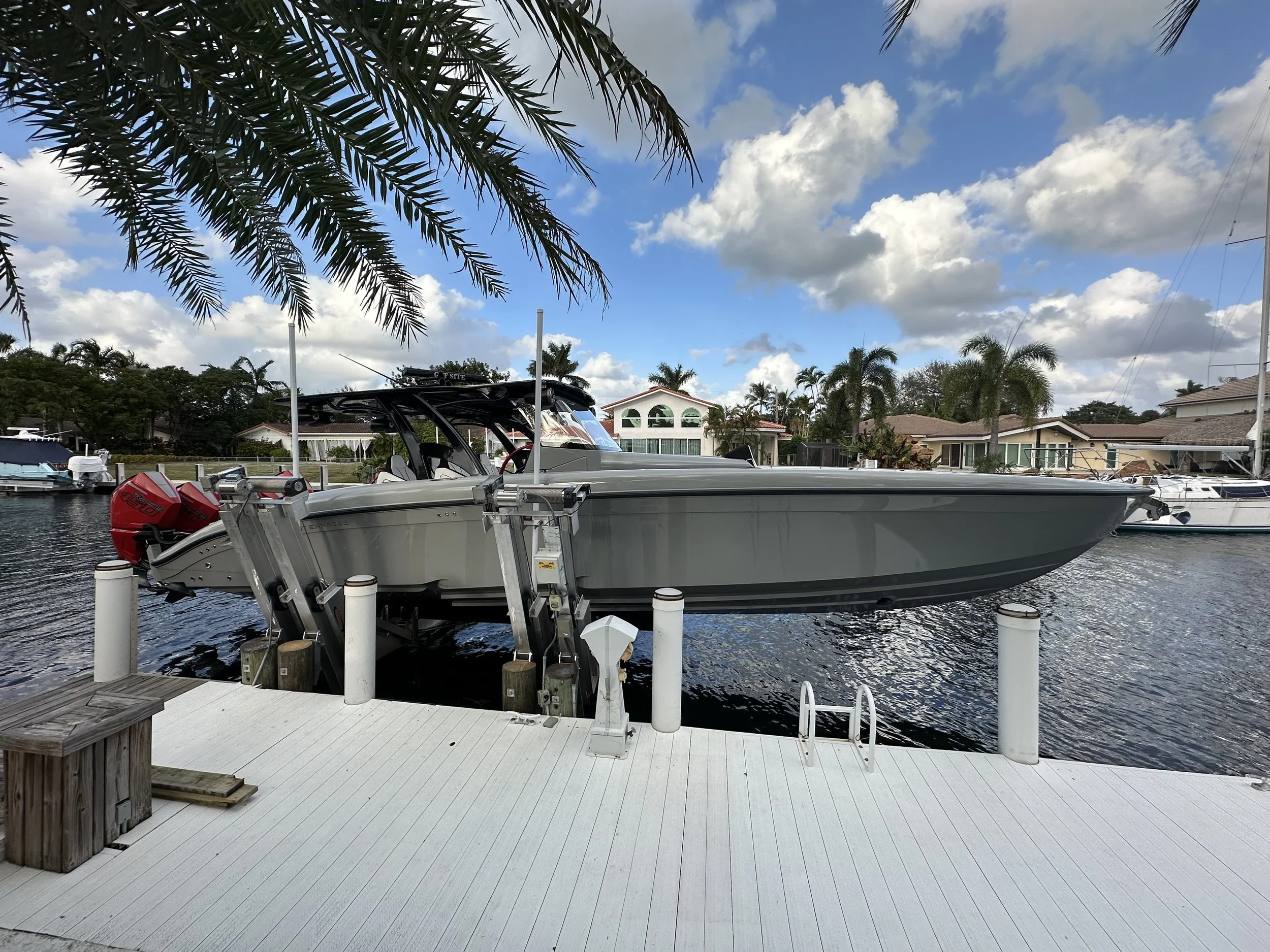
WHY AN ELEVATOR BOAT LIFT?
Elevator boat lifts are one of the best solutions for waterfront properties with unique canal layouts or specific vessel requirements. Unlike a standard cradle lift, the elevator configuration provides exceptionally smooth and stable operation — and the space-efficient footprint worked perfectly with this homeowner's existing dock setup.
For this project specifically, the elevator design allowed the vessel to be securely stored completely out of the water while maintaining easy, comfortable boarding access from the dock. No stepping down, no awkward angles — just clean, simple access every time they head out.
The benefits this homeowner gets every single day:
— Smooth, quiet lifting operation with no jerking or uneven movement
— Full hull protection — the vessel is completely out of Lighthouse Point's saltwater canal when stored
— Elimination of barnacle growth and hull fouling — saving thousands in bottom paint and maintenance annually
— Space-efficient design that works cleanly within the existing dock layout
— 27,000-pound rated capacity with significant margin above the vessel's actual loaded weight
— Built specifically for South Florida's tidal canals and hurricane load requirements
HOW THE INSTALLATION CAME TOGETHER
Before anything else, our team came out to the property and did a thorough site evaluation — water depth at low tide, piling layout, slip dimensions, and dock configuration. Getting this right before a single component arrives on site is what prevents surprises during installation and ensures the system performs exactly as designed.
From there we managed every Broward County permit filing in-house. The homeowner never contacted a single agency — we handled everything from the initial application through final approval.
Once permits were in hand the installation followed a clear sequence:
1. Structural support installation — ensuring everything was level, properly aligned, and anchored correctly for the 27,000-pound load capacity
2. Hurricane Elevator Lift assembly — every connection point checked, torqued to specification, and verified before electrical work began
3. Marine-grade electrical connections — switch installation and control system wiring run to code for safety and insurance compliance
4. Full load testing — we brought the vessel in and ran complete raise and lower cycles, checked level, verified all limit switches, and made final adjustments until everything operated perfectly
We did not leave until the system was completely dialed in and the homeowner was comfortable operating it.
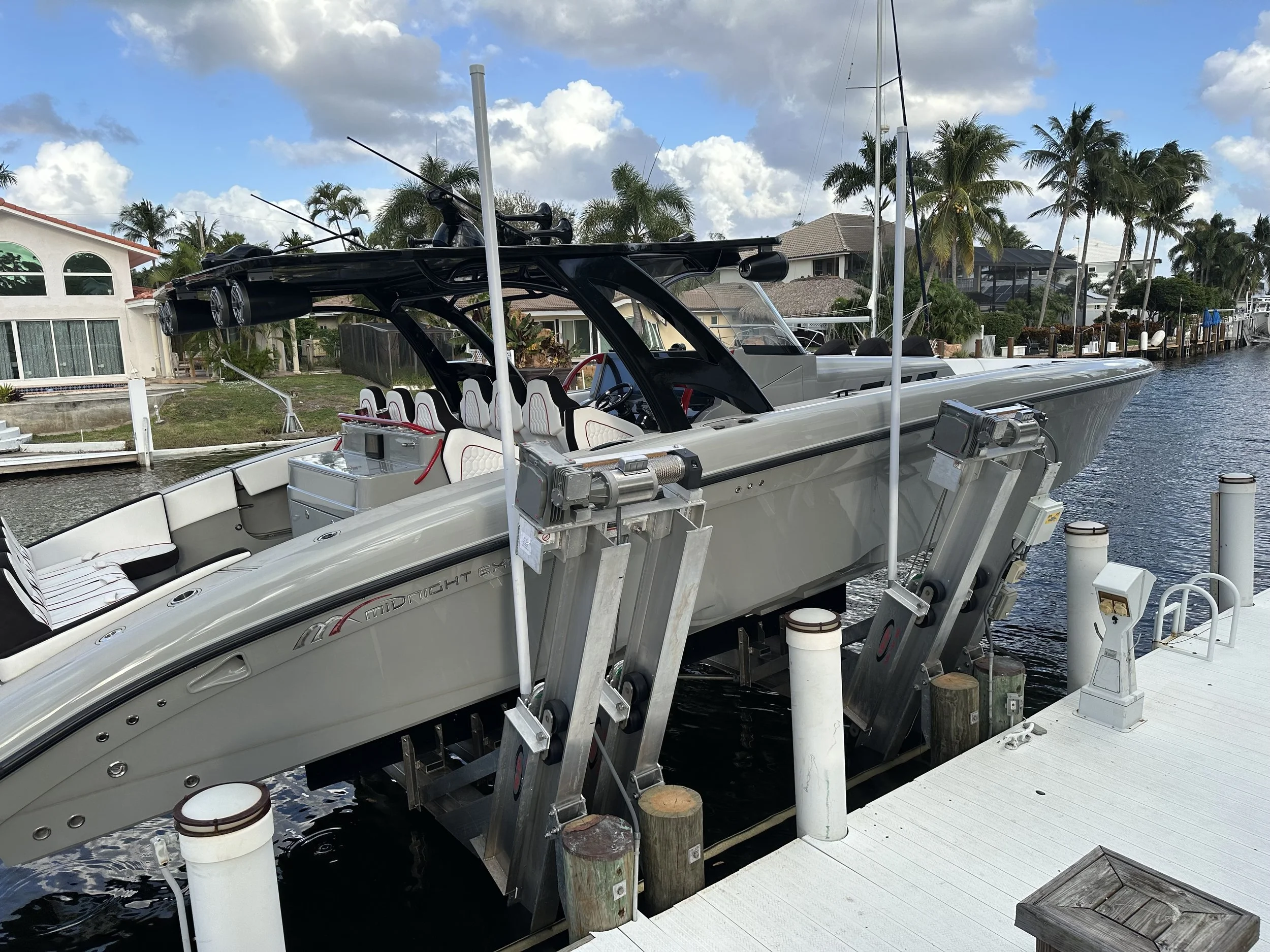
Completed 27,000 lb Hurricane Elevator Boat Lift installation in Lighthouse Point, FL. Designed to safely store and protect a large center console vessel while providing reliable operation and long-term durability in South Florida’s marine environment.
DESIGNED FOR LIGHTHOUSE POINT WATERFRONT LIVING
Lighthouse Point is home to some of the most beautiful waterfront properties in Broward County — and some of the largest center console and offshore vessels in South Florida. Selecting the correct lift capacity for vessels like this is not just about matching the boat's dry weight. It means accounting for a full fuel load, all gear, water in livewells, and everything else on board when the lift is in use.
The 27,000-pound Hurricane Elevator Lift gives this homeowner the capacity margin they need to lift confidently every time — without stressing the system or cutting it close on rated capacity.
ABOUT JKT MARINE CONSTRUCTION
JKT Marine is a licensed, family-owned marine contractor serving waterfront homeowners throughout Palm Beach County, Broward County, and Martin County. We install and service all major boat lift brands — Golden, Hi-Tide, Tide Tamer, Hurricane, AMF, and Sunstream — and we handle every permit in-house on every project.
If you are planning a boat lift installation in Lighthouse Point or anywhere in South Florida, call us or send photos of your waterfront. We will come out, assess your site, and give you a real quote with no pressure and no obligation.
📞 (561) 418-0383
Licensed CGC1537758 · Fully Insured · Family-Owned · Serving Palm Beach, Broward & Martin County
RELATED SERVICES
— Boat Lift Installation South Florida: jktmarine.com/boat-lift-installation
— Boat Lift Brands & Dealers: jktmarine.com/boat-lift-dealers-south-florida
— Boat Lift Maintenance: jktmarine.com/boat-lift-maintenance-south-florida
— 4-Post vs 8-Post Boat Lift Guide: jktmarine.com/4-post-vs-8-post-boat-lift-guide
— Jet Ski Docks Lighthouse Point: jktmarine.com/jet-ski-docks-lighthouse-point
Do I Need a Permit to Build a Dock in Palm Beach County?
If you are a waterfront homeowner in Palm Beach County considering adding or replacing a dock, this is one of the first questions you will ask — and the answer matters more than most people realize. Building without the required permits is not just a technicality. It can result in fines, a required order to demolish what you built, and serious problems when you try to sell your property.
Here is a straightforward guide to dock permitting in Palm Beach County from the team at JKT Marine Construction, who handles this process on behalf of clients every week.
Yes — You Need a Permit
In virtually every case, dock construction in Palm Beach County requires permits. This applies to new dock construction, full dock replacement, significant structural repairs, dock extensions that change the footprint, and adding a boat lift to an existing dock.
Minor repairs — like replacing a few damaged boards with like-for-like materials without changing the structure — may not require a permit. But any project that changes the size, configuration, or structural components of your dock almost certainly does.
Which Agencies Are Involved?
This is where Palm Beach County dock permitting gets more complex than many homeowners expect. Depending on your property's location and the scope of your project, you may need approvals from multiple agencies, not just one.
Palm Beach County Building Division — The starting point for most residential dock projects. You will need a building permit from the county that covers the structural work.
South Florida Water Management District — SFWMD has jurisdiction over the waterways of South Florida and requires permits for structures built in or over the water. Most dock projects in Palm Beach County require SFWMD Environmental Resource Permit review.
Army Corps of Engineers — Projects in or near navigable waters — including most Intracoastal Waterway properties in Palm Beach County — may require a Section 404 permit from the Army Corps of Engineers or a Nationwide Permit verification.
Florida Department of Environmental Protection — FDEP jurisdiction may apply depending on the waterway classification of your property.
Town or City Building Departments — Some municipalities in Palm Beach County — including Jupiter, Palm Beach Gardens, West Palm Beach, and others — have their own building departments with their own requirements in addition to county-level permits.
How Long Does Dock Permitting Take in Palm Beach County?
For a standard residential dock project with straightforward site conditions, expect 6 to 10 weeks from permit application to approval. Projects on the Intracoastal Waterway, near protected seagrass or manatee zones, or requiring multiple agency review can take 10 to 16 weeks or longer.
This is the number one reason to start your project early. Waiting until you are ready to use your dock before starting the permit process means you will be waiting much longer than you expect.
What Happens If You Build Without a Permit?
The consequences of unpermitted dock construction in Palm Beach County are serious.
Code enforcement fines can be substantial and accumulate daily until the violation is resolved. The county can issue a stop-work order and require you to halt construction immediately. In some cases the county can require demolition of unpermitted work at your expense. Unpermitted structures must be disclosed when you sell your property and can prevent a sale from closing or require resolution as a condition of closing. Your homeowner's insurance may not cover damage to unpermitted structures.
No legitimate cost savings from skipping permits are worth these consequences.
What Does Dock Permitting Cost?
Permit fees for a residential dock project in Palm Beach County typically run $1,500 to $5,000 depending on project scope, the number of agencies involved, and any required surveys or environmental assessments. JKT Marine includes permit management in our project quotes — you do not deal with any agency directly.
What Information Is Needed to Apply for a Dock Permit?
A typical dock permit application in Palm Beach County requires a survey of your property showing the existing shoreline and proposed dock location, engineering drawings showing the dock design and structural specifications, a site plan showing setbacks from property lines and the waterway, your property address and legal description, and proof of property ownership.
JKT Marine prepares and submits all permit documentation on your behalf. We have done this many times and know exactly what each agency requires, which prevents delays from incomplete applications.
Can I Handle Permitting Myself?
Technically yes — but it is rarely a good idea for homeowners. The permit applications involve technical engineering documentation, environmental assessments, and knowledge of each agency's specific requirements. Mistakes or missing information result in rejections that add weeks to your timeline. Contractors who do this regularly move faster and with fewer delays because they know the process and the agencies involved.
JKT Marine Handles All Permitting In-House
When you hire JKT Marine Construction for your dock project, we manage the entire permitting process from start to finish. Palm Beach County Building, SFWMD, Army Corps, FDEP — we file everything, respond to any agency questions, and track your application through to approval. You never contact a government office.
Licensed CGC1537758. Fully insured. Owner on every project. Serving Palm Beach County and Broward County. Free estimates at (561) 418-0383 or info@jktmarine.com.
Frequently Asked Questions
Do I need a permit to replace my dock in Palm Beach County? In virtually all cases yes. A full dock replacement is treated as new construction from a permitting standpoint. Even if you are rebuilding to the same footprint, permits are required.
How do I find out what permits my dock project needs? The easiest approach is to work with a licensed marine contractor who knows Palm Beach County's requirements. JKT Marine provides free consultations and can tell you exactly what permits your project will require before you commit to anything.
Does my dock permit expire? Yes. Building permits in Palm Beach County are typically valid for 180 days and require periodic inspections to remain active. We manage inspection scheduling as part of our project process.
Can I build a floating dock without a permit in Palm Beach County? No. Floating docks require the same permitting as fixed docks in Palm Beach County, including SFWMD and potentially Army Corps review depending on the waterway.
Vinyl vs Concrete Seawall — Which Is Better for South Florida?
If you are replacing a failing seawall or installing a new one on your South Florida waterfront property, you will quickly encounter a fundamental choice — vinyl sheet pile or concrete panels. Both are widely used throughout Palm Beach County and Broward County. Both can last decades when properly installed. But they are not the same, and the right choice depends on your specific property, waterway, and budget.
Here is a complete comparison from the team at JKT Marine Construction, who has installed both types throughout South Florida.
Quick Comparison
Vinyl seawall — Lower installed cost, lighter weight, easier installation, no corrosion risk, good for typical residential canals, lifespan of 50 or more years, lower long-term maintenance cost.
Concrete seawall — Higher upfront cost, heavier and stronger, requires more complex installation, excellent long-term durability, preferred for high-energy waterways and commercial applications, lifespan of 30 to 50 years with proper maintenance.
Vinyl Sheet Pile Seawalls
Vinyl sheet pile has become the dominant choice for residential seawall replacement in South Florida over the last 20 years — and for good reason.
Modern marine-grade vinyl is engineered specifically for saltwater environments. It does not rust, corrode, or deteriorate from saltwater exposure the way concrete with steel rebar can over time. It is lighter than concrete, which simplifies installation and typically reduces cost. And it carries a lifespan of 50 or more years with virtually no maintenance required beyond occasional cleaning.
Vinyl is the right choice for most residential canal properties throughout Palm Beach and Broward County. Typical canal conditions — moderate tidal movement, calm water, residential boat traffic — are well within what vinyl seawalls handle comfortably.
Cost for vinyl seawall installation in South Florida typically runs $200 to $500 per linear foot installed depending on height requirements, soil conditions, and site complexity. A 100-foot residential vinyl seawall typically runs $25,000 to $50,000 fully installed and permitted.
Concrete Seawalls
Concrete panel seawalls are heavier, more labor-intensive to install, and more expensive upfront than vinyl. But they offer a level of mass and rigidity that vinyl cannot match — which matters in specific situations.
Concrete is the preferred choice for properties with high tidal energy or significant wave action, commercial applications where heavy vessel traffic or loading is involved, properties where an existing concrete seawall is being repaired or partially replaced and matching the existing material is important, and large estate properties where aesthetic appearance matches an existing concrete structure.
The vulnerability of concrete seawalls in South Florida is the steel rebar inside the panels. South Florida's saltwater environment is aggressive — water that penetrates cracks in the concrete reaches the rebar and begins to corrode it. Corroding rebar expands, cracking the concrete from the inside. This is why older concrete seawalls in South Florida need monitoring and maintenance — the concrete itself can last indefinitely but the rebar inside is the limiting factor.
Cost for concrete seawall installation in South Florida typically runs $350 to $700 per linear foot installed. A 100-foot concrete seawall typically runs $40,000 to $80,000 fully installed and permitted.
Which One Is Right for Your Property?
For most South Florida residential canal properties — vinyl is the right answer. It is less expensive, requires virtually no maintenance, handles typical canal conditions comfortably, and will outlast concrete in terms of corrosion resistance. It has become the industry standard for residential seawall replacement throughout Palm Beach and Broward County for good reason.
Choose concrete when you have a high-energy waterway with significant wave action or tidal surge, when you are repairing or partially replacing an existing concrete seawall and matching material is important, or when a commercial or high-load application requires the mass and rigidity that only concrete provides.
What About Hybrid Solutions?
Some seawall projects in South Florida use a combination approach — vinyl sheet pile for the main wall structure with a poured concrete cap along the top. This gives you the corrosion resistance and cost advantages of vinyl while providing a clean, durable cap surface that handles foot traffic and dock connections well. This is one of the most common approaches we use at JKT Marine and often represents the best of both materials.
Permitting for Seawall Installation in South Florida
All seawall installation and replacement projects in South Florida require permits. Depending on your location you may need approval from Palm Beach County or Broward County Building, SFWMD, FDEP, and the Army Corps of Engineers. JKT Marine handles all permit filings in-house — you never contact an agency directly.
Get a Free Seawall Assessment
JKT Marine Construction installs vinyl, concrete, and hybrid seawalls throughout Palm Beach County and Broward County. We will assess your property honestly and recommend the right solution for your specific conditions and budget. Licensed CGC1537758, fully insured, owner on every project.
Call (561) 418-0383 or email info@jktmarine.com to schedule your free assessment.
Frequently Asked Questions
How long does vinyl seawall last in South Florida? Marine-grade vinyl seawalls installed correctly in South Florida typically last 50 or more years. Unlike concrete, vinyl has no rebar to corrode and does not require painting or sealing.
How long does a concrete seawall last in South Florida? A well-built concrete seawall lasts 30 to 50 years. Lifespan depends significantly on the quality of the original installation and how well cracks are addressed before water reaches the rebar inside.
Can a vinyl seawall be installed in front of an existing failing concrete seawall? Yes — this is sometimes called a seawall overlay or sister wall installation. A new vinyl sheet pile wall is driven directly in front of the existing concrete wall, extending the life of the system without requiring full demolition of the old wall. This can be a cost-effective option in some situations.
Which seawall type has better resale value? Both vinyl and concrete seawalls in good condition are viewed positively by buyers and inspectors. The key for resale value is condition — a well-maintained vinyl seawall is more valuable than a deteriorating concrete one.
How Long Does Boat Lift Installation Take in South Florida?
One of the most common questions we hear from South Florida waterfront homeowners considering a boat lift is — how long is this whole process going to take? The honest answer is that there are two timelines involved, and understanding both will help you plan your project correctly.
The Two Timelines: Permitting vs Installation
Every boat lift installation in South Florida involves two completely separate phases. The first is permitting — getting approval from the relevant government agencies before any work begins. The second is the physical installation, which is the part most homeowners think of when they ask about timeline.
Understanding this distinction upfront prevents the frustration that comes from expecting a two-day job and not realizing that six to eight weeks of permitting paperwork comes first.
Boat Lift Permitting Timeline in South Florida
Boat lift installation in Palm Beach County and Broward County requires permits. Depending on your property's location, you may need approval from your county's building department, the South Florida Water Management District, the Florida Department of Environmental Protection, and in some cases the Army Corps of Engineers.
A standard residential boat lift permit in Broward or Palm Beach County typically takes 4 to 8 weeks from submission to approval under normal circumstances. Properties on the Intracoastal Waterway or near protected waterways may require additional agency review, which can extend this to 8 to 12 weeks.
The good news is that once you sign your contract with JKT Marine, we submit your permit application immediately. The clock starts right away and you are not losing time waiting on paperwork.
Physical Boat Lift Installation Timeline
Once your permits are approved and your lift equipment is on-site, the physical installation moves quickly. Here is what to expect for different types of installations.
A standard 4-post boat lift installation on an existing dock typically takes 1 to 2 days. This includes unloading the lift components, installing the motor housing and cables, setting the cradle, leveling, and testing the system.
A PWC or jet ski lift installation takes 1 day in most cases.
A new boat lift installation that requires new pilings to be driven takes 2 to 3 days — one day for pile driving and 1 to 2 days for the lift installation.
A floating boat lift installation typically takes 1 to 2 days depending on the complexity of the mooring system.
Total Timeline From First Call to Finished Installation
Here is a realistic end-to-end timeline for a typical South Florida boat lift project.
Week 1 — Site visit, quote, and contract signed. Permit application submitted immediately.
Weeks 2 through 6 — Permitting review period. During this time your lift equipment is ordered and secured.
Week 6 to 8 — Permits approved. Installation scheduled.
Day 1 to 2 of installation — Physical installation completed. System tested and handed off to you.
From your first call to a finished, working boat lift — plan on 6 to 10 weeks total for a standard project. Complex projects on the Intracoastal or requiring multiple agency approvals may run 10 to 14 weeks.
How to Move Faster
The biggest thing you can do to speed up your project is to start early. Many South Florida homeowners call us in March wanting a lift ready for Memorial Day weekend in May. That timeline is very tight. Call in January or February and you have comfortable margin even if permitting takes a little longer than expected.
The second thing that helps is to have photos ready when you call. Photos of your existing dock, the water depth at your slip, and the boat you want to lift allow us to give you an accurate quote faster and submit a complete permit application without delays for additional information.
What Brand of Boat Lift Installs Fastest?
All the major brands we carry — Golden, Hi-Tide, Tide Tamer, Hurricane, Neptune, and Sunstream — have similar installation timelines once the permit is in hand. Brand choice does not significantly affect how long installation takes. What matters more is whether your site requires new pilings, which adds a day to the physical installation.
JKT Marine Construction — Boat Lift Installation Throughout South Florida
We handle every permit in-house and submit immediately after you confirm. We will give you a realistic timeline at the start of your project and keep you updated throughout the permitting process. Licensed CGC1537758, fully insured, owner personally on every installation.
Call (561) 418-0383 or email info@jktmarine.com to get started.
Frequently Asked Questions
Can you install a boat lift without a permit in South Florida? No. Unpermitted boat lift installation can result in fines, required removal, and serious complications when selling your property. Any contractor who suggests skipping permits should be avoided. JKT Marine handles all permitting on every project.
Does boat lift installation require me to be home? You do not need to be home during installation, but we appreciate a walkthrough at the start and a final inspection with you at the end so we can walk you through operating your new lift.
What happens if my permit takes longer than expected? Delays happen — especially for properties near protected waterways or during busy permitting seasons. We monitor your permit application and communicate any delays to you as soon as we become aware of them. We do not schedule installation until permits are fully approved and in hand.
How do I know what size boat lift I need? Lift capacity should be at least 20 to 25 percent greater than your boat's total weight — including fuel, water, gear, and equipment. Never size a lift to your boat's dry weight alone. We help you calculate the right capacity during your free estimate.
Signs Your Seawall Is Failing — And What To Do Before Storm Season
If you're a waterfront homeowner in South Florida, your seawall is one of the most important — and most overlooked — structures on your property. It protects your land, your landscaping, your dock, and your home from the water. When it starts to fail, it rarely announces itself loudly. The damage builds quietly until one storm season turns a manageable repair into a six-figure replacement.
Here is what to look for and what to do about it before the next hurricane season hits.
7 Signs Your Seawall Is Failing
1. Cracks in the Seawall Face or Cap
Hairline cracks in the cap or face of your seawall are the earliest warning sign. They allow water to penetrate behind the wall, eroding the soil that holds everything in place. Small cracks caught early are a few-thousand-dollar repair. Left alone for two or three storm seasons, that same crack can lead to full panel failure.
2. Soil Erosion or Sinkholes Behind the Wall
If you notice the ground behind your seawall sinking, soft spots in your yard near the water's edge, or visible voids behind the wall, water is already moving through or under the structure. This is a serious warning sign that requires immediate attention.
3. The Wall Is Leaning Toward the Water
A seawall that is visibly tilting or leaning toward the canal or Intracoastal is under structural stress. The tieback system that anchors the wall to the soil behind it may be failing. This does not fix itself — it only gets worse.
4. Rust Stains Running Down the Face
Orange or brown staining running vertically down your seawall is a sign that the steel rebar inside the concrete panels is corroding. Once rebar begins to rust in South Florida's saltwater environment it expands, cracking the concrete from the inside. This accelerates rapidly.
5. Water Seeping Through the Wall
If you can see water coming through the face of your seawall during high tide or after heavy rain, the wall has been compromised. What is seeping through is also carrying fine soil particles with it — slowly hollowing out the ground behind the wall.
6. Panels Shifting or Separating
Gaps between panels, panels that have moved out of alignment, or sections that look uneven compared to the rest of the wall are all signs of structural movement. Once panels begin shifting the problem accelerates quickly.
7. Cap That Has Separated From the Wall
The cap sits on top of your seawall and ties everything together. If it has cracked, lifted, or separated from the panels beneath it, water is getting directly behind the wall with every high tide.
What To Do Before Storm Season
South Florida's hurricane season runs June through November. The combination of storm surge, heavy rainfall, and sustained wind loading puts enormous stress on seawalls that are already compromised. A wall that is holding together today may not survive a direct hit from a tropical storm if it has underlying damage.
Step one is to get a professional assessment before June. A qualified marine contractor can inspect your seawall and tell you honestly whether you need repair, reinforcement, or replacement — and what it will cost. At JKT Marine Construction we provide free seawall inspections throughout Palm Beach and Broward County with no pressure and no obligation.
Step two is to act on what you find. Permitting in South Florida takes 4 to 8 weeks in normal conditions. If you wait until May to schedule an inspection and then need permitted repair work, you may not get it done before storm season. Start early.
Step three is to document your seawall's condition with photos before any storm hits. This protects you for insurance purposes if a storm causes or worsens existing damage.
How Much Does Seawall Repair Cost vs Replacement?
Crack injection and sealing typically runs $2,000 to $8,000. Seawall cap replacement runs $5,000 to $15,000. Tieback anchor installation runs $8,000 to $20,000. A full seawall replacement runs $15,000 to $150,000 or more depending on linear footage and materials.
The math is simple — catching problems early almost always costs a fraction of what full replacement costs. A $6,000 repair today can prevent a $90,000 replacement in three years.
Get a Free Seawall Inspection Before Storm Season
JKT Marine Construction provides free seawall assessments throughout Palm Beach County and Broward County. Licensed CGC1537758, fully insured, owner on every job site. We give you an honest assessment with real cost numbers — no pressure, no obligation.
Call (561) 418-0383 or email info@jktmarine.com to schedule your free inspection.
Frequently Asked Questions
How often should a seawall be inspected in South Florida? We recommend a professional inspection every 3 to 5 years for seawalls under 20 years old, and every 1 to 2 years for older seawalls. Always inspect after a major storm.
How long does a seawall last in South Florida? A properly built concrete seawall lasts 30 to 50 years. Vinyl seawalls can last 50 or more years. Regular maintenance and early repairs significantly extend lifespan.
Can a failing seawall be repaired without full replacement? In many cases yes. Crack injection, cap replacement, and tieback reinforcement can extend a seawall's life by 10 to 20 years at a fraction of replacement cost. The key is catching the damage before it becomes structural failure.
Does homeowner's insurance cover seawall damage? Coverage varies by policy. Storm surge damage may be covered under flood insurance. Standard wear and deterioration is typically not covered. Document your seawall's condition annually so you have a baseline if you ever need to file a claim.

Seawall Cleaning and Maintenance Guide for South Florida Homeowners
Regular seawall cleaning and maintenance is the single most cost-effective thing a South Florida waterfront homeowner can do to protect their investment. JKT Marine explains exactly what proper seawall maintenance involves, how often it should be scheduled, and what it prevents throughout Palm Beach County and Broward County.
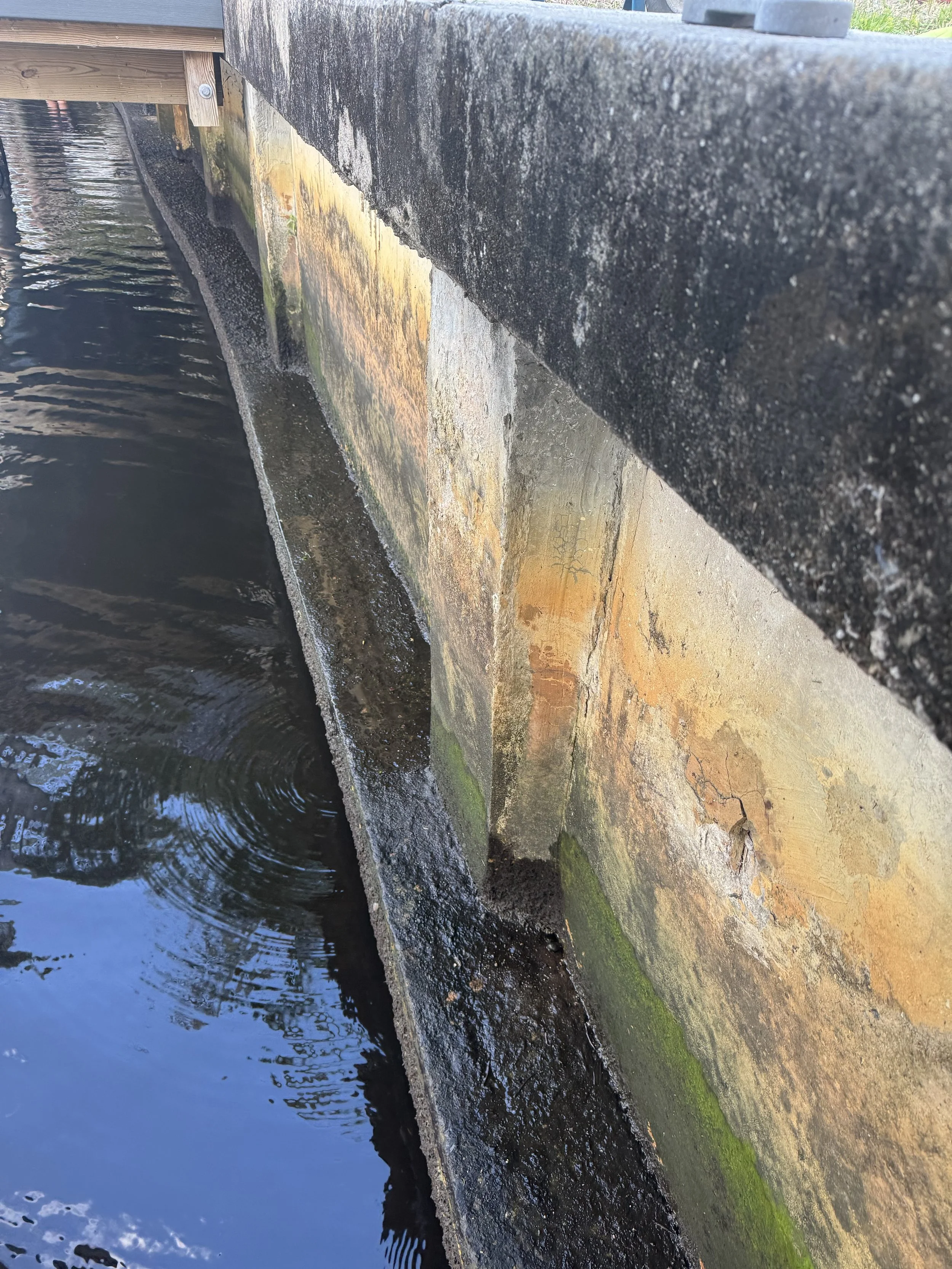
Seawalls exposed to South Florida’s marine environment often develop algae, marine growth, staining, and organic buildup over time. Regular seawall cleaning helps maintain appearance, identify potential issues early, and extend the life of waterfront structures.
Seawall Cleaning and Maintenance Guide for South Florida Homeowners
Ask most South Florida waterfront homeowners when they last had their seawall professionally cleaned and maintained and the answer is almost always the same — never, or not recently. It is understandable. A seawall that is not visibly failing tends to get overlooked in favor of the dock, the boat lift, and the landscaping that are more immediately visible from the property.
But here is the reality that JKT Marine's ownership team sees consistently throughout Palm Beach County and Broward County — the seawalls that need the most expensive emergency repairs are almost always the ones that received no routine maintenance. And the seawalls that reach 40 or 50 years of service life in sound structural condition are almost always the ones where a homeowner paid attention to basic maintenance along the way.
This guide explains exactly what professional seawall cleaning and maintenance involves, how often it should be scheduled in South Florida's specific environment, and what it prevents over the service life of your wall.
Why South Florida Is Harder on Seawalls Than Almost Anywhere Else
Before getting into what maintenance involves, it helps to understand why seawall maintenance matters so much more in South Florida than in most other coastal regions.
Saltwater exposure is constant and year-round. South Florida's tidal canals, Intracoastal Waterway, and coastal waterways expose seawalls to saltwater chemistry 24 hours a day, 365 days a year. Salt infiltrates concrete surfaces, accelerates steel corrosion, and degrades exposed hardware at a rate that inland or freshwater environments simply do not produce.
Biological growth is aggressive and fast. Barnacles, algae, and other marine organisms attach to seawall surfaces within weeks of installation in South Florida's warm water. Left unchecked, this growth traps moisture against the concrete surface, creates conditions that accelerate crack formation, and provides a pathway for saltwater infiltration into the concrete matrix.
UV radiation is intense. South Florida's solar exposure degrades concrete sealers, accelerates surface weathering, and drives the thermal expansion and contraction cycles that widen hairline cracks over time. Maintenance intervals that are adequate in northern climates are often insufficient in South Florida's solar environment.
Tidal cycling creates continuous drainage demands. South Florida's tidal waterways move water in and out of canal systems continuously — and that movement deposits sediment and biological debris into seawall drainage points with every tidal cycle. Blocked drainage is one of the most common and most preventable causes of accelerated seawall deterioration throughout Palm Beach and Broward County.
What Professional Seawall Cleaning and Maintenance Includes
Professional seawall maintenance is meaningfully different from hosing down the dock or running a pressure washer along the wall face on a Saturday morning. Here is exactly what a proper maintenance visit from JKT Marine covers.
Surface cleaning and marine growth removal
We begin every maintenance visit with a thorough pressure washing of the full seawall face — removing barnacles, algae, calcium deposits, and biological growth from the wall surface using professional pressure washing equipment and marine-safe cleaning solutions that will not harm the canal ecosystem, your dock hardware, or the seawall material itself.
A clean seawall surface is not just aesthetic. It allows proper visual inspection of the concrete face for developing cracks and deterioration that are hidden under biological growth. It removes the moisture-trapping biological layer that accelerates surface concrete deterioration. And it eliminates the foothold that marine growth uses to work its way into hairline cracks and joint gaps over time.
Weep hole and drainage system clearing
Every weep hole and jet filter drainage point in the seawall is cleared of sediment, debris, and biological blockage and tested for proper water flow. Drainage points that are missing, damaged, or structurally compromised are flagged for repair or replacement.
This step is one of the most important in the entire maintenance process. Blocked drainage is a silent structural threat — it builds hydrostatic pressure behind the wall that actively pushes panels outward over time and is one of the leading causes of seawall leaning and failure throughout South Florida's canal communities.
Structural condition walkthrough
With the wall surface clean and the drainage system cleared, our team walks the full length of the seawall and conducts a detailed structural assessment — noting crack location and size, cap condition, any visible changes in panel alignment, tie rod corrosion indicators, soil erosion signs behind the wall, and cap elevation relative to current county standards.
The clean wall surface after pressure washing allows us to see hairline cracks and early-stage surface deterioration that would be invisible beneath the layer of biological growth present on an unmaintained wall. This is why professional cleaning and structural assessment go together — you cannot effectively assess a dirty seawall.
Crack sealing and joint treatment
Hairline cracks and panel joint gaps identified during the structural walkthrough are sealed with marine-grade flexible sealant before water infiltration can reach the internal rebar and tieback rod connections behind the concrete. This is the most cost-effective structural intervention available in seawall maintenance — sealing a hairline crack during a routine maintenance visit costs a small fraction of what that same crack costs to address after it has allowed rebar corrosion to begin.
Concrete sealing and surface treatment
We apply marine-grade concrete sealer to the cleaned seawall surface — creating a protective barrier against saltwater infiltration, UV degradation, and the salt crystal expansion that widens hairline cracks over time. Concrete sealing significantly slows the primary deterioration mechanism affecting concrete seawalls in South Florida's environment and is one of the highest-return preventive maintenance steps available to waterfront homeowners.
Written condition report
Every JKT Marine maintenance visit concludes with a written condition report delivered to you covering the current structural status of every wall component, any issues identified during the visit and their recommended treatment, and a timeline for follow-up work if any is needed. You always leave a maintenance visit knowing exactly where your seawall stands structurally.
How Often Should a Seawall Be Professionally Maintained in South Florida?
The right maintenance interval depends on your wall's age, material, and waterway exposure. Here is what JKT Marine recommends based on our field experience throughout Palm Beach County and Broward County.
Vinyl seawalls under 20 years old in protected residential canals
Annual cleaning and inspection is appropriate for most vinyl seawalls in this category. The primary maintenance needs are drainage clearing and structural inspection — vinyl's corrosion resistance means the surface treatment work required for concrete is not a factor, but drainage and structural monitoring remain important throughout the wall's service life.
Concrete seawalls under 25 years old
Annual professional cleaning, drainage clearing, and structural inspection — with concrete sealer application every 2 to 3 years and prompt crack sealing whenever hairline cracks are identified during inspection visits.
Concrete seawalls 25 to 40 years old
Semi-annual professional maintenance — once in spring before peak boating and storm season, and once in fall after hurricane season. Concrete sealer application annually. Prompt attention to any crack, cap, or drainage issue identified during visits.
Concrete seawalls over 40 years old
Annual professional inspection at minimum with semi-annual cleaning recommended. Walls in this age range in South Florida's environment are approaching or at the stage where restoration or replacement planning becomes relevant — regular professional assessment is the only reliable way to stay ahead of developing structural issues at this age.
Any seawall after a named storm or hurricane
A professional cleaning and inspection visit after any named storm event is recommended regardless of the wall's age or your regular maintenance schedule. Storm surge and wave loading stress seawall systems in ways that are not always visible from the surface, and post-storm debris commonly blocks drainage points that need to be cleared before the next tidal cycle.
What Regular Maintenance Prevents — and What It Costs to Skip It
The financial case for regular seawall maintenance in South Florida is straightforward. Here is how deferred maintenance compounds into significantly larger expense over time.
Skipping annual drainage clearing allows hydrostatic pressure to build behind the wall over months and years — eventually contributing to panel movement and structural failure that costs $15,000 to $50,000 to correct structurally, versus the cost of clearing drainage during a routine maintenance visit.
Skipping concrete sealing allows saltwater infiltration to reach internal rebar at an accelerated rate — compressing the timeline between hairline crack formation and structural rebar corrosion damage from years to months.
Skipping crack sealing during maintenance visits allows hairline cracks — which cost very little to seal when first identified — to become pathways for rebar corrosion that cost thousands to address once they have allowed internal damage to begin.
Skipping structural inspection allows developing problems to progress without detection — reaching the point where repair becomes more expensive or replacement becomes necessary when earlier identification would have allowed lower-cost intervention.
The pattern is consistent. Every dollar spent on routine seawall maintenance in South Florida prevents multiple dollars in repair costs that result from the deterioration that maintenance prevents. Annual professional maintenance for a South Florida seawall is not optional upkeep — it is the lowest-cost approach to seawall ownership available to waterfront homeowners in this environment.
JKT Marine Annual Seawall Maintenance Programs
JKT Marine Construction offers structured annual and semi-annual seawall maintenance programs for residential waterfront homeowners, HOAs, and marina operators throughout Palm Beach County, Broward County, and Martin County.
Our maintenance programs include full surface cleaning, drainage system clearing and testing, detailed structural inspection with written report, marine-grade concrete sealing, crack and joint sealing, and priority scheduling for any repair work identified during maintenance visits.
If your seawall has not been professionally cleaned and inspected in the past 12 months — or has never received professional maintenance — call JKT Marine to schedule a visit. We provide a free initial assessment and clearly explain what your specific wall needs based on its age, material, and waterway conditions.
Call (561) 418-0383 or email info@jktmarine.com.
JKT Marine Construction — Licensed CGC1537758 · Fully Insured · Family-Owned · All Permits Handled · Serving Palm Beach County, Broward County and Martin County
How Long Does a Seawall Last in South Florida?
How Long Does a Seawall Last in South Florida?
One of the most common questions JKT Marine hears from waterfront homeowners throughout Palm Beach County and Broward County is also one of the most important — how long is my seawall supposed to last?
How Long Does a Seawall Last in South Florida?
One of the most common questions JKT Marine hears from waterfront homeowners throughout Palm Beach County and Broward County is also one of the most important — how long is my seawall supposed to last? The answer depends on the material it is made from, the conditions it faces, and how consistently it has been maintained. Here is what our ownership team tells homeowners based on decades of hands-on experience with South Florida seawalls.
The honest baseline: South Florida is hard on seawalls
Before discussing specific lifespans, it is worth understanding why South Florida's environment is harder on seawall systems than most other parts of the country.
Saltwater is corrosive. South Florida's tidal canals, Intracoastal Waterway, and coastal waterways expose seawalls to saltwater chemistry 24 hours a day, 365 days a year — a level of sustained exposure that does not exist for seawalls in freshwater environments or in less active tidal systems.
UV radiation is intense and year-round. South Florida's solar exposure accelerates surface degradation on exposed concrete and degrades sealers faster than in northern climates — meaning maintenance intervals that work in other states may be insufficient here.
Hurricane season is real. South Florida seawalls experience storm surge, wind-driven wave action, and waterborne debris impacts during significant storm events that seawalls in most other coastal regions simply do not face.
Boat traffic is heavy. The density of recreational and commercial vessel traffic throughout South Florida's waterway network — particularly on the Intracoastal Waterway — generates continuous repetitive wake energy on seawall systems that compounds structural fatigue over time.
With that context established, here are realistic lifespan expectations by material.
Concrete seawall lifespan in South Florida: 30 to 50 years
Properly installed precast concrete seawalls in South Florida typically last 30 to 50 years. The wide range reflects the significant impact of maintenance on concrete seawall longevity.
A concrete seawall that receives periodic professional maintenance — annual cleaning, regular sealing every 3 to 5 years, prompt crack sealing when hairline cracks appear, and timely cap replacement when the cap shows significant deterioration — consistently reaches the upper end of that range and can extend beyond it.
A concrete seawall that receives no professional maintenance after installation — where cracks are left unsealed, the cap is allowed to deteriorate unchecked, and drainage points become blocked — will typically reach the lower end of that range or fall short of it.
The dominant failure mechanism for concrete seawalls in South Florida is internal rebar corrosion — steel reinforcement inside the panels and cap rusting, expanding, and fracturing the surrounding concrete from the inside. This process is invisible in its early stages and accelerates as it progresses. Managing it through periodic sealing and prompt crack repair is the single most important maintenance practice for concrete seawall longevity.
Vinyl seawall lifespan in South Florida: 40 to 50+ years
Properly installed vinyl sheet pile seawalls in South Florida typically last 40 to 50 years or more. Because vinyl does not contain steel rebar or any material that reacts chemically to saltwater, it avoids the internal corrosion failure mechanism that limits concrete seawall lifespan — giving vinyl a practical longevity advantage in South Florida's saltwater environment despite costing less to install.
Vinyl's lifespan is influenced primarily by the quality of the installation — specifically the embedment depth, the tieback system design, and the cap construction — rather than by the ongoing maintenance decisions of the homeowner. A well-installed vinyl seawall requires relatively minimal maintenance compared to concrete and can approach or exceed the 50-year mark with annual cleaning and periodic drainage servicing.
Composite seawall lifespan in South Florida: 50+ years
Composite seawall systems — combining vinyl sheet piling with reinforced concrete caps and enhanced tieback configurations — offer the longest expected service life of any residential seawall material in South Florida. Properly installed composite systems on Intracoastal and high-exposure waterfront properties can realistically achieve 50 or more years of structural service life.
What shortens a seawall's life regardless of material
Several factors consistently shorten seawall lifespan in South Florida regardless of whether the wall is concrete, vinyl, or composite.
Blocked drainage is one of the most preventable and most common lifespan-shortening factors. When weep holes and jet filter drainage points become clogged with sediment and marine debris, hydrostatic pressure builds behind the wall instead of equalizing — actively pushing panels outward and accelerating structural failure.
Deferred maintenance on visible problems is another consistent factor. A hairline crack that costs $500 to seal today becomes a $5,000 structural repair in three years and a $50,000 wall section replacement in seven years. Every concrete seawall problem that is visible on the surface has been developing invisibly for years before it appears — which means visible problems that are left unaddressed are already in an accelerated failure phase.
Storm damage that goes uninspected is also a significant factor. Major storm events stress seawall systems in ways that are not always immediately visible from the property surface. Post-storm inspections that would identify and address damage while it is still manageable are one of the most valuable professional services available to South Florida waterfront homeowners.
What extends a seawall's life
Annual professional inspection — identifying developing problems before they reach the point of structural significance — is the single most cost-effective thing a South Florida waterfront homeowner can do to extend seawall life.
Regular cleaning removes marine growth that traps moisture against concrete surfaces and accelerates surface deterioration. Periodic concrete sealing creates a protective barrier against saltwater infiltration on concrete walls. Prompt attention to drainage system blockage prevents the hydrostatic pressure buildup that is one of the leading causes of seawall structural failure.
JKT Marine provides free seawall inspections and annual maintenance programs for waterfront homeowners throughout Palm Beach County, Broward County, and Martin County. If your seawall has not been professionally assessed in the past five years — or has never been assessed — call us at (561) 418-0383 for a free on-site evaluation.
Licensed CGC1537758 · Family-Owned · All Permits Handled